

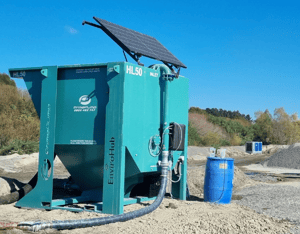


Gravel deposits swept into Nelson City’s largest river after flooding – exposing the city to unreasonable flood risk. The deposits in the Maitai (Mahitahi) river raised water levels and inundated nearby land, leaving the same areas prone to flooding in future severe weather events.
The client
Kūmānu (formally Nelmac)
The project
Keeping the river bed dry to enable flood mitigation work.
The challenge
Kūmānu, the local environmental infrastructure firm, needed to address the gravel build-up and reduce flood risk while minimising environmental impact.
The plan involved removing the gravel, slightly adjusting the river’s course and installing a flood wall. This required working in a dry riverbed to avoid disrupting the river ecosystem.
The Maitai's large catchment area and a reservoir prone to overflow added to the challenge – with work needing completion before the winter.
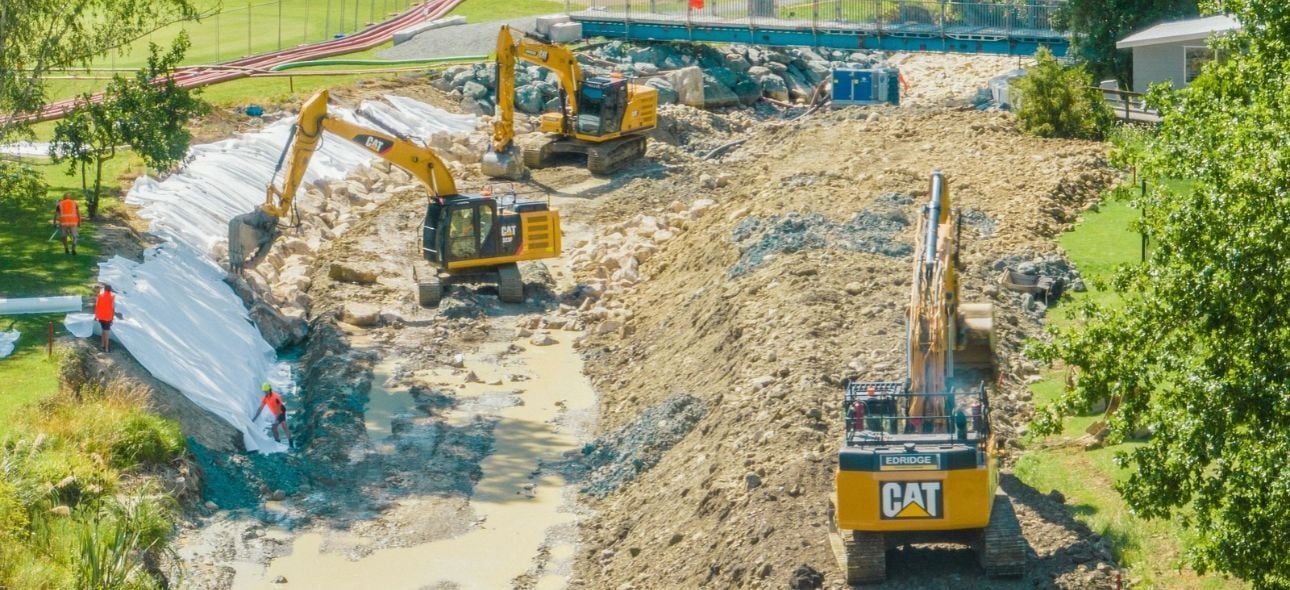
Contractors removing gravel deposits and installing rock retaining to reduce riverbank erosion
The solution
The Prime team set up BBA vacuum-assisted self priming pumps to manage a 300m section of the Maitai River. This operation involved pumping 750L per second to expose the riverbed for construction.
Kūmānu first built a temporary dam to direct the river towards the pumps, allowing the construction team to work on the exposed riverbed.
Prime deployed three BA180s and one BA300 pump – using five discharge lines to handle peak flows. Each discharge line ran the full 300m length of the bypass. The team worked around the clock to maintain optimal flow and monitor water levels.
Kūmānu's environmental team and local iwi also worked on site to relocate aquatic life and monitor for taonga during construction.
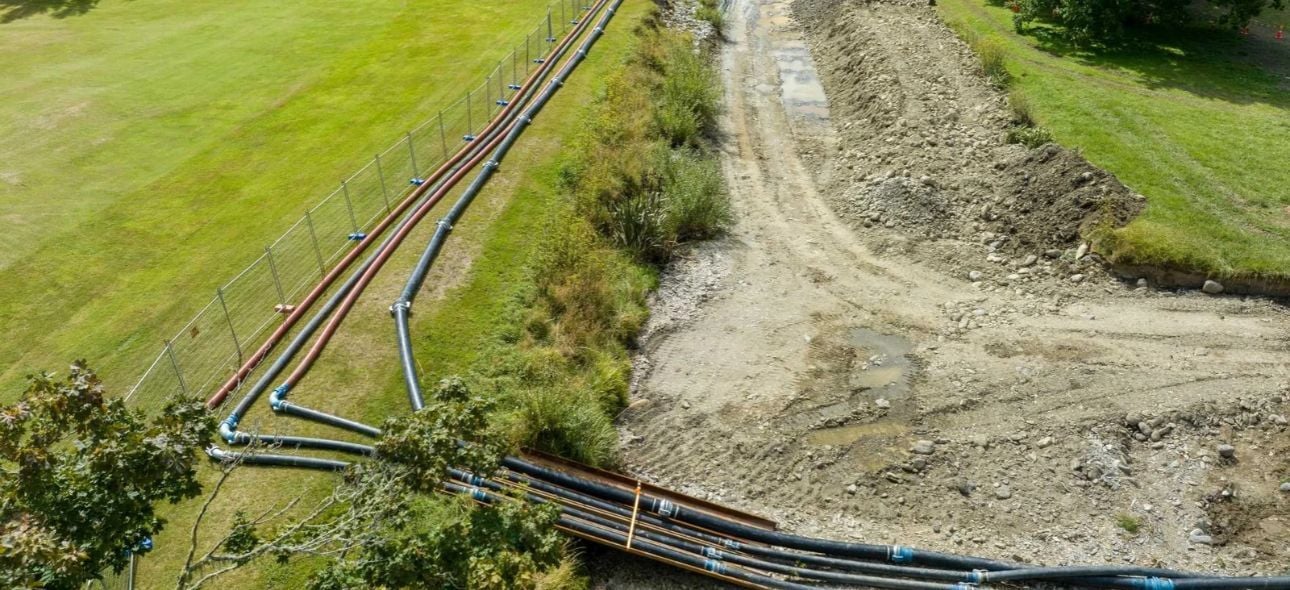
Five pump lines were used to manage flow and ensure continuity
The outcome
Within four days, Kūmānu successfully:
-
Adjusted the river course
-
Installed the flood wall
-
Removed the gravel.
A second 200m section was then overpumped using two additional BA150 pumps to manage the deeper stretch of the river. The project minimised environmental disruption and enabled effective flood mitigation work – improving the city’s resilience to future flooding.