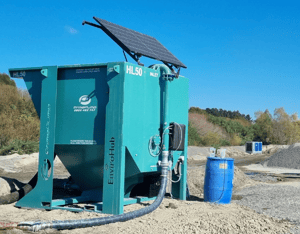
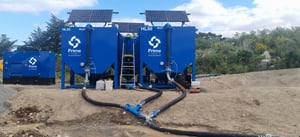
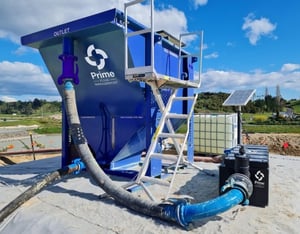
Lamella clarifier settling tanks use closely spaced, inclined plates to create a large settling area on a small footprint. Water is forced up and over the plates, leaving the solids to slide into the sludge hopper below.
Prime's EnviroHub lamella settling tanks are portable and efficient. They work equally on tight urban sites or in remote, hard-to-access locations – with remote monitoring and solar-powered dosing available.
Like the entire Prime water treatment range, they’re modular – operating as single or multiple units, or as part of a wider water treatment solution.
MODELS
HL20 | HL50
Footprint
4.83 | 6.96 m²
Flow Range
1-20 | 1-50 m³/hr
Settling Area
20 | 48.62 m²
EnviroHub lamella clarifiers treat sediment-laden site water where large settling ponds aren't practical or where further clarification is needed. They work well for:
Water characteristics, pumping arrangements and discharge targets all influence the right treatment setup. Prime helps assess these factors to identify a suitable clarifier and configuration.
Depending on your project, we can also provide water testing, chemical dosing, installation and commissioning services.
Compare base units, solar and mains-powered dosing options. See practical operating features, site applications and the equipment and support available to help you choose the right setup.
The EnviroHub Lamella Clarifier has a steel tank and frame with a primer and protective two-pack paint finish.
It's available in two sizes and three configurations. Continuous solar dosing depends on sunlight exposure and panel positioning.
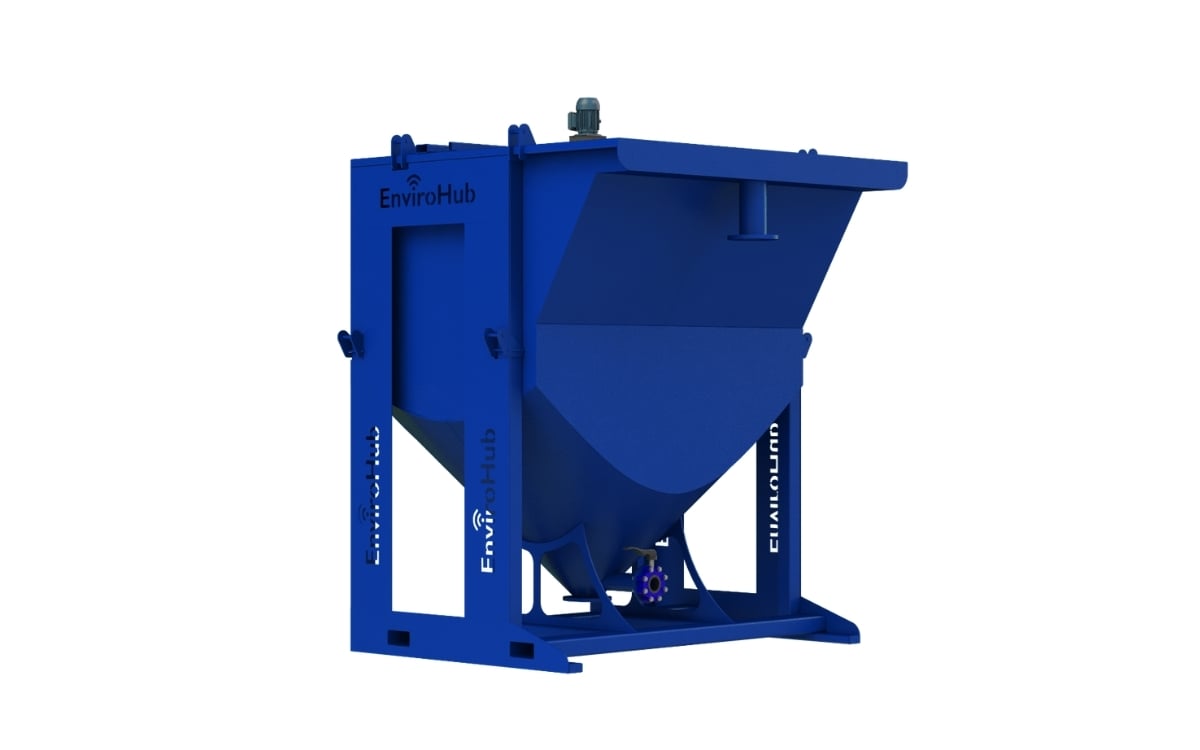
Inclined plates settle suspended solids by gravity – without integrated dosing. Separate chemical dosing is optional.
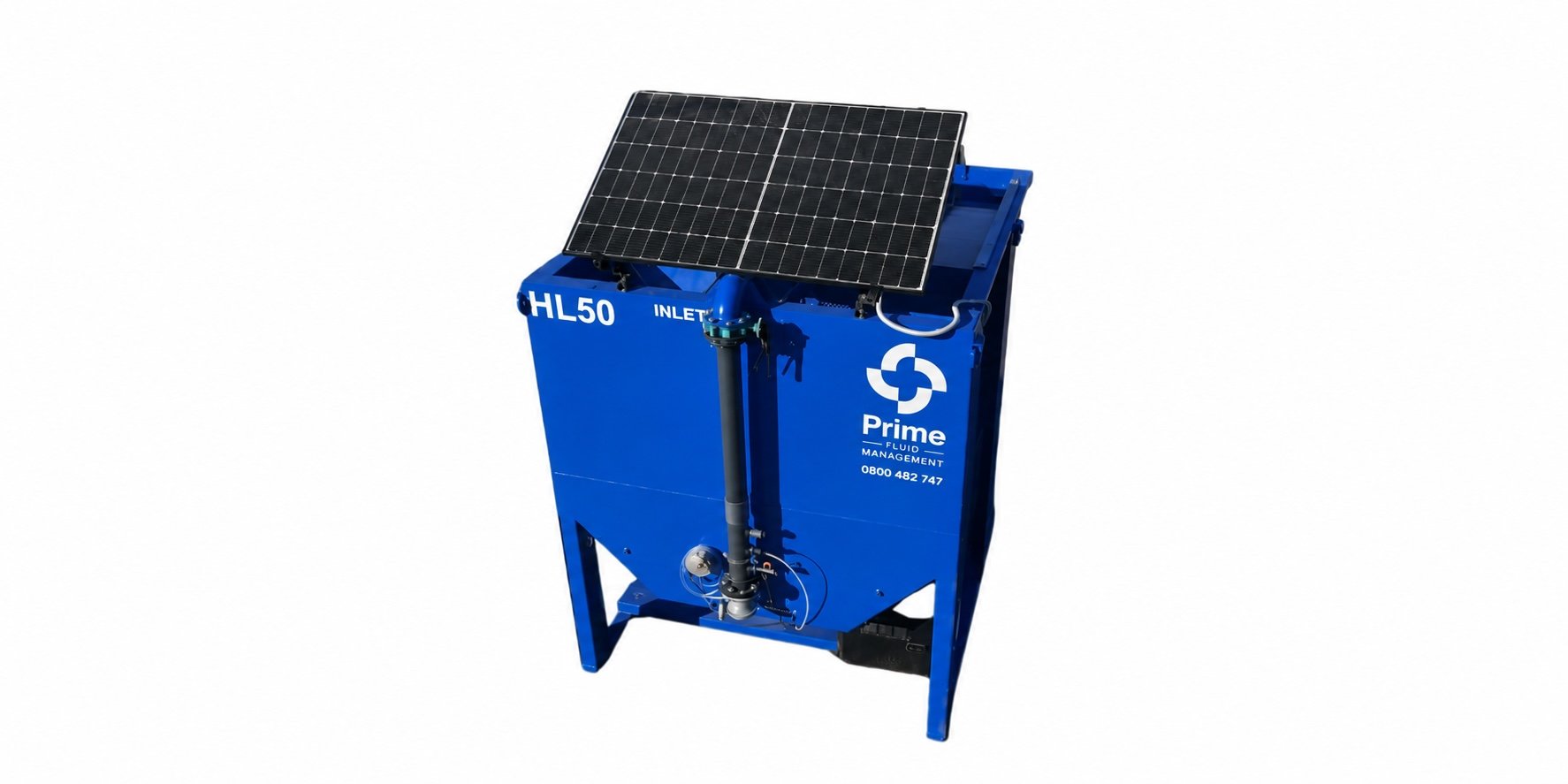
Gravity settling with solar-powered chemical dosing – designed for 24/7 operation at remote off-grid sites.
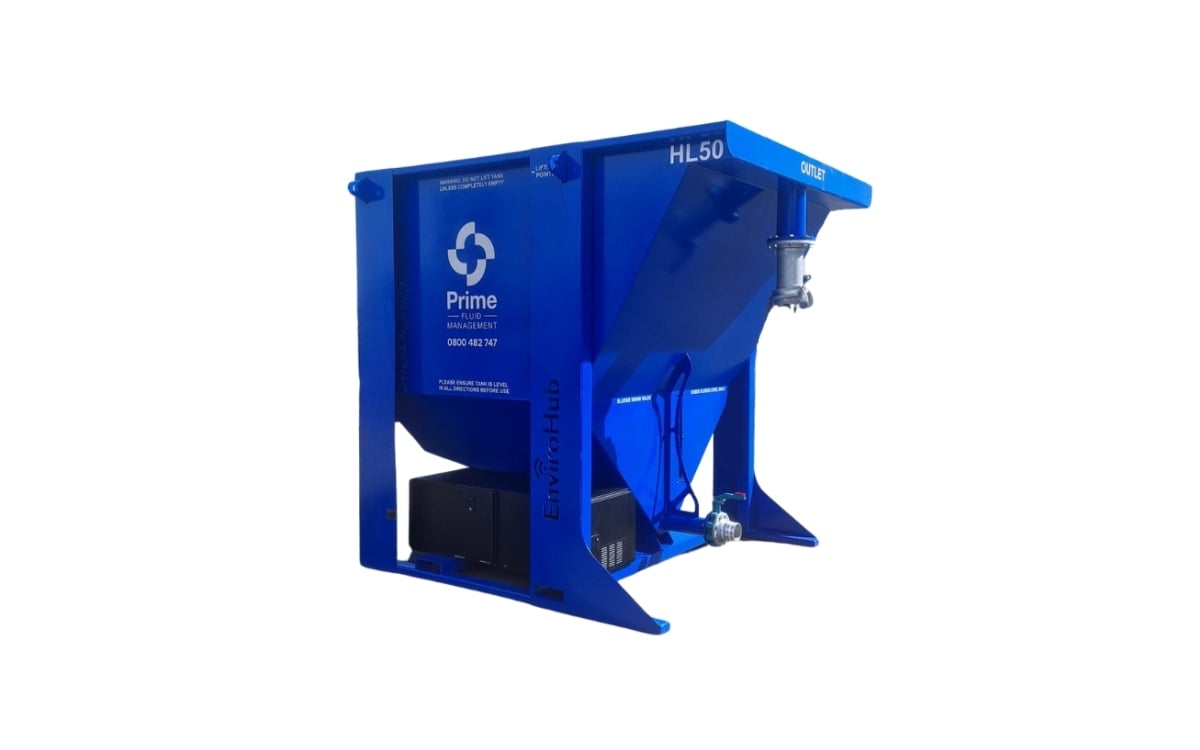
Gravity settling with integrated chemical dosing for sites with an existing power supply.
See how Prime has used lamella clarifiers to manage sediment-laden water on challenging civil construction projects.
Separate sediment and sludge on site with settling tanks and reusable bag options.
Match dosing to your site and level of control with manual or proportional systems.
Treat alkaline wastewater with standalone, fixed, batch or continuous-flow dosing systems.
Monitor water quality with live data and alerts – so your team can respond when conditions change.
Share a few details about your job and we'll be in touch to help you choose a lamella clarifier setup.
Fill out the form below or call us on 0800 482 747
The HL20 handles up to 20 m³/hr – compared with 50 m³/hr for the HL50. Actual throughput depends on how much sediment the water carries and how readily it settles.
Explore the models, configurations and site setup considerations in our lamella clarifier product range brochure.
No – lamella clarifiers use gravity to settle solids, but dosing may help fine particles clump together so they settle more readily. Both models are available as base units, or with solar or mains powered dosing.
Find out about our dosing systems.
The result depends on incoming water quality, flow rate, solids loading and dosing. Lamella plate settlers remove suspended solids, but dissolved contaminants may need other treatment. Prime can test your water and help set up treatment to meet the discharge targets in your environmental management plan (EMP) or discharge consent.
Not always – a conventional sedimentation tank or pond often removes heavier sediment first, leaving the lamella to clarify the water further. On space-limited sites, the lamella may replace a pond if water conditions allow.
Discover our range of settling tanks and bags.
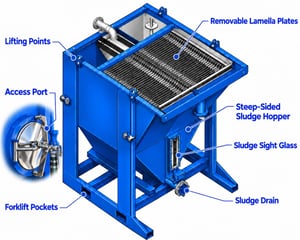
There's no fixed interval – heavier solids loading means more frequent sludge checks and removal. Use the sight glass to monitor levels in the hopper. A sucker truck can remove accumulated sludge, or the system can pump it to a sludge pond or bag while treatment continues. For internal cleaning, remove the lamella incline plates and use the access port to wash down the tank.