/Logo/Prime_logo_web_colour.svg)
/Logo/Prime_logo_web_white.svg)
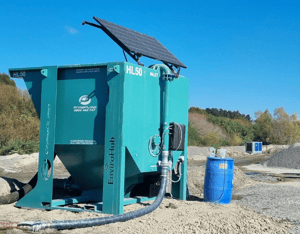

Overview of our Wastewater Treatment Plant Pumps
Submersible wastewater and sewage pumps use channel, vortex and cutter impellers to handle solids and fibrous material across industrial duties.
- Max flow: 6,600m³/hr
- Max head: 70m
- Max solids handling: up to 100mm
- Materials: cast iron
Tsurumi aerators provide oxygen transfer and circulation to support solids suspension and biological treatment in wastewater and process water.
- Max air flow rate: 528m3/hr
- Max water depth: up to 6m
- Power: 0.75-40kW
- Air inlet bore: 25-150mm
Dry or submerged pumps for wastewater jobs needing clean installs, cooling, and easy access.
- Discharge sizes: up to 700mm
- Max flow: 3,000L/s
- Max head: 90m
- Closed-loop cooling
Dry-installed pumps for plant or station use with flexible horizontal or vertical mounting options.
- Discharge sizes: 32-700mm
- Max flow: 3,000L/s
- Max head: 90m
- Horizontal or vertical mounting
External tank mixing for sludge tanks and digesters, tailored with no in-tank moving parts.
- Discharge sizes: 100-300mm
- Max flow: 300L/s
- Max head: 11m
- Multiple configurations
LJM stirrers are designed for optimal wastewater treatment, preventing sedimentation and ensuring efficient media movement.
- Power: 1.5 to 18.5kW
- Self-cleaning propeller
- Low energy consumption
- Heavy-duty cast structures
This Wangen pump is designed for precise conveying and dosing in wastewater treatment plants. It features a durable, wear-resistant flexible joint that requires no oil filling, ensuring maintenance-free operation and preventing media contamination
- Series: KB10 (Plastic)
- Flow Rate: 0.5 up to 200L/h
- Series: KB22S (Cast Iron)
- Flow Rate: 200 up to 4000L/m
- Max Pressure: 16 bar
Developed for ease of maintenance, you can change wear parts of the Wangen Xpress with the pump still in your pipeline. Suitable for low-viscous media.
- Series: Xpress
- Power: 7.5 – 18.5kW
- Speed: 152 – 221rpm
- Max flow: 102m³/hr
- Max pressure: 6 Bar
Wangen produces an extensive range of hopper feed pumps for slurries and pastes with high solids content (KL-R Series) and dewatered sludge (KL-RU, KL-RQ, KL-RS and KL-R Triplex models).
- Max flow: 560m3/hr
- Max pressure: 48 bar
- Max solids: 45%
- For extremely dry or lumpy material
Wangen's KL-S, KB-S and KB22S self-priming progressive cavity pumps convey high viscous media up to 200,000 mPA-s, with or without solids. The KB22S is designed specifically for dosing.
- Max Flow: 560 m3/hr
- Max Pressure: 48 bar
- Materials: S/steel, cast iron
Varisco J-Series pumps suit applications that require fast priming from demanding suction heights, and the ability to manage polluted waste and abrasive fluids with suspended solids.
- Max flow: 1200m3/hr
- Max head: 110m
- Max solids: 76mm
- Self-priming: up to 7.5m
SolidsPro submersible mixers keep solids suspended in wastewater or effluent slurries for pumping, treatment or storage.
- Speed: 750-1,450rpm
- Power: 0.6-5.3kW
- Reaction thrust: 78-830N
- Propeller diameter: 128-400mm
- Materials: cast iron with 316 stainless steel propeller
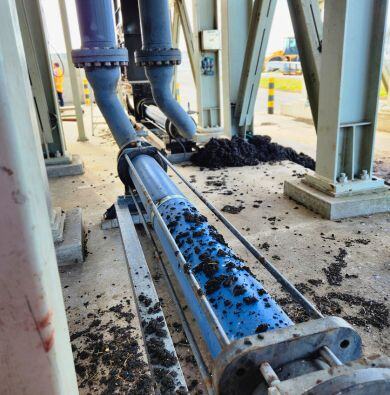
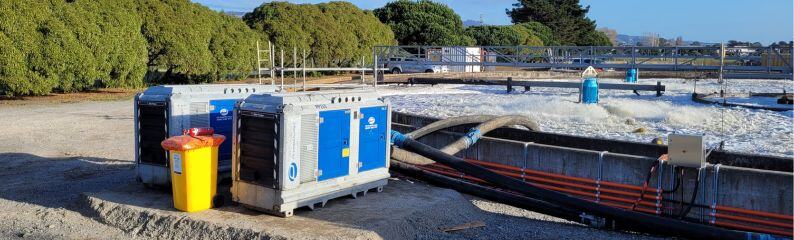
In the field
Here are some examples of our solutions being used.
Read Sludge & Slurry Articles
They brought their mechanics, they didn't just dump it and leave….couldn't have done it without them to be honest
This sort of unique system you set up is what sets you apart from others in the Market
I had an amazing experience with Prime Pump at the Transmission Gully ... will recommend you guys anytime and anywhere.
You guys had our backs from the get-go and stood beside us and persevered.
We called for a different type of solution…... We were pretty happy with what's been delivered
Prime supplied us with the best solution for hire and the instant availability was what we needed… We certainly will be using them in the future
Make an enquiry
Let’s sort your fluid management needs
Speak to an expert
FAQ
At Prime Fluid Management, we understand that every fluid management challenge brings unique considerations. Here, you’ll find clear, practical answers and expert guidance to help you maximise uptime, achieve regulatory compliance, extend equipment life, and implement the most effective solution for your site.
A slurry pump is designed to move mixtures of liquid and solid particles where the liquid component helps the material flow. It is built with abrasion and corrosion resistant materials and a robust design to handle the wear from suspended solids.
A sludge pump is designed to handle much thicker and stickier material known as sludge which has a higher solid content. These pumps often use positive displacement or slow moving mechanisms to avoid clogging and manage dense viscous fluids.