

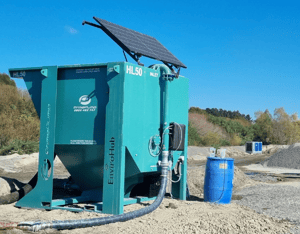

Incline plate settling uses angled plates and gravity to separate suspended solids from water. It helps lamella clarifiers treat silty site water where a large settling pond isn't practical.
How does incline plate settling work?
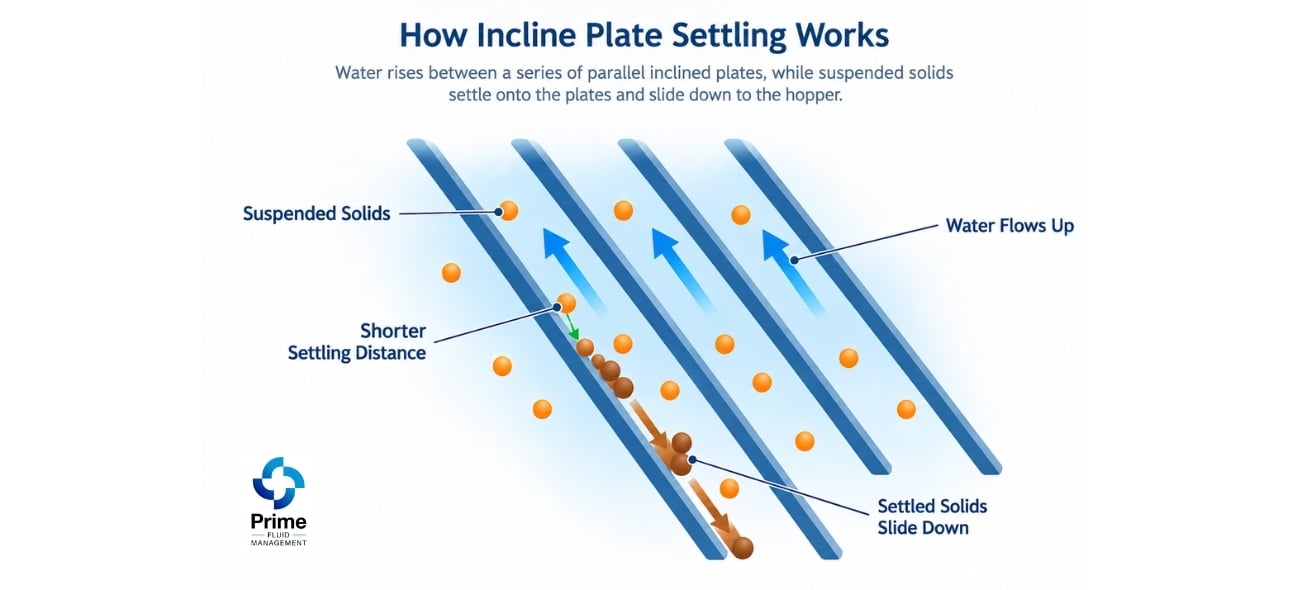
Water enters the clarifier and rises between closely spaced lamella plates. Suspended particles fall and settle onto the plates, then slide down into a sludge hopper. Clarified water continues to the outlet for discharge or further treatment.
The plates don't filter the water – they give solids more surface space to settle on.
How does incline plate settling save space?
In a conventional settling pond, particles may need to fall through the full depth of the water. Incline plates give them a much closer surface to settle on – around 50mm away in Prime's EnviroHub lamella clarifier units.
Together, the closely spaced plates create more settling area without increasing the tank’s footprint. The gaps between them also help steady the upward flow and reduce turbulence.
At Brynderwyn Hills, Prime positioned lamella clarifiers in narrow spaces beside the highway, where large sediment retention ponds weren't practical.
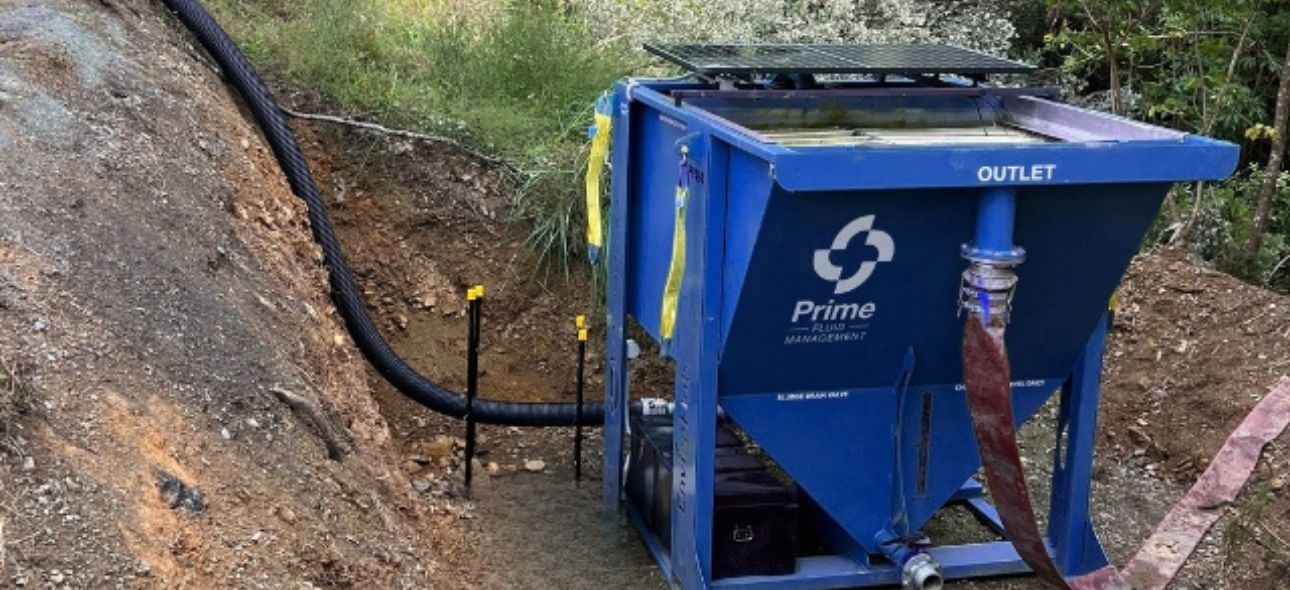
EnviroHub lamella clarifier installed in a narrow roadside excavation by SH1 at Brynderwyn Hills
Why are the plates angled?
As solids settle onto the inclined plates, they gather into a heavier layer. Gravity then draws the collected sludge down towards the hopper – clearing the way for more solids to settle.
The plate angle and spacing help balance settling efficiency with reliable sludge removal. If sediment clogs the gaps, it restricts water flow and makes cleaning harder.
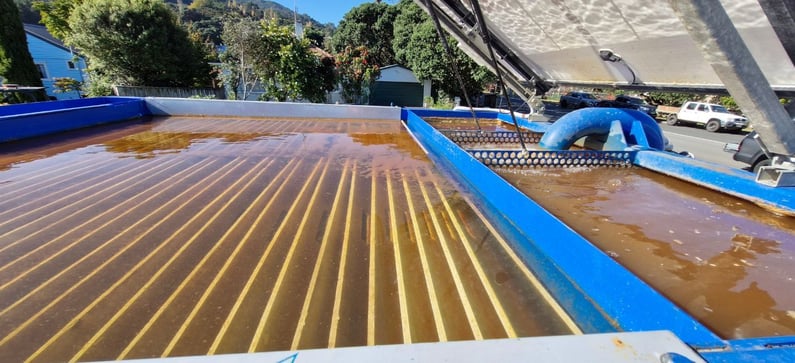
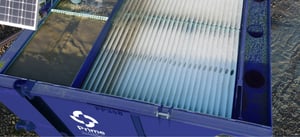
Incline plates inside a lamella clarifier during arsenic treatment at Thames
What affects incline plate settling performance?
Push water through faster than the clarifier is designed to handle and some particles may reach the outlet before settling. Heavy sediment loads also mean more frequent sludge removal.
Very fine particles may need flocculant dosing to help them bind together and settle more easily. A separate dosing system adds the chemical before water reaches the plates.
The process removes solids that settle under gravity. Dissolved contaminants remain in the water and may need further treatment.
What works depends on the incoming water and the discharge quality you're aiming for.
See how our lamella clarifier tanks use incline plate settling.
Related terms
Coagulation | Flocculation | Lamella Clarifier | Settling Tank | Sludge Hopper | Total Suspended Solids | Turbidity