Skip to content

Flood Control

Low-footprint, high-volume surface-mounted and submersible Pump Station pumps.

    Build resilience into your stormwater network

    In stormwater planning, pumps are your last line of defense. Rapid response and resilience in the face of extreme environments is critical - whether it's your work site, farm or regional district.

    Prime Fluid Management has partnered with Dutch suppliers Bosman Watermanagement and BBA Pumps to tailor flood protection technology for New Zealand's changing climate. We work with Councils, consultants and civil contractors to deliver solutions that stand up to environmental and economic scrutiny.

    From fish-friendly design to increased resilience and reduced carbon footprint, our goal is to deliver better outcomes with lower impact for New Zealand communities.

    SURFACE-MOUNTED

    BBA High-volume Flood Control Pumps

    BBA Pumps is a manufacturer of portable pumps, piping systems and smart logistic solutions. Their BA Series auto-prime pumps span smaller multi-use drainage pumps to large-scale surface-mounted flood control. Even at scale, portability and footprint are key considerations..  

    • centrifugal pump with an axial flow impeller
    • dry self-priming
    • EPA Tier 4 Volvo Penta diesel engine
    • Four-year BBA Limited Factory Warranty
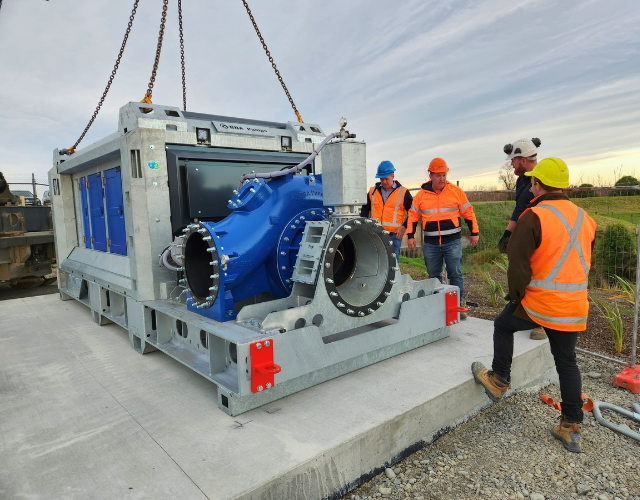
    BBA High-volume Flood Control Pumps
    SUBMERSIBLE

    Fish-friendly by design

    The Vision Pump is a modular, fish-friendly mixed-flow pump designed to safely transport aquatic life while delivering high-capacity performance in both new and existing pumping stations.

    Key features:

    • Single-blade impeller for reduced fish injury
    • Water-lubricated
    • Capacities from 12 to 360 m³/min
    Fish-friendly by design

    Overview of our Flood Control

    Bosman Vision Series Fish-Friendly Pumps

    The Bosman Vision Series are compact, low noise, low footprint submersible draining and irrigation pumps that perform at range, with limited impact on aquatic life and waterways. 

    • Flow: 12 - 360m3/min
    • Efficiency: up to 85%
    • Fish mortality <2% 
    • Water-lubricated bearings  
    BBA BA400 Relocatable Flood Control Pump

    The BA400 D540 is a relocatable auto-priming centrifugal pump used for flood control or large-scale emergency response. EPA Tier 4 Volvo Penta diesel engine, 85% efficiency at BEP.  Four-year BBA Limited Factory Warranty.

    • Max flow: 3250m3/hr
    • Max head: 25mwc
    • Max solids: 100mm
    • Sound: 65dB @10m
    BBA BA500 Relocatable Drainage Pump

    Producing 37psi and with a favourable NPSHr curve, the BA500g D675 flood control pump will discharge water over long distances through extended pipelines. It is suited to dredging, land reclamation and surface-mounted flood control. Four-year BBA Limited Factory Warranty.

    • Max flow: 4500m3/hr
    • Max head: 26mwc
    • Max solids: 115mm
    • Sound: 75dB @10m
    BBA BA600 Ultra-high Flow Flood Control Pump

    The BA600 D743 is ideal for tackling high water during heavy rain events and flooding. It is quiet and features exterior lighting, lifting features and automatic levelling.  Efficiency is 88% BEP. Four-year BBA limited factory warranty.

    • Max flow: 6,500m3/hr
    • Max head: 31psi
    • Max solids: 135mm
    • Noise: 75bD @10m
    BBA BA700 Ultra-high Flow Flood Control Pumps

    The largest in BBA’s mobile flood control series, the BA700 D810 will shift 7,800m3/hr. Careful attention has been paid to mobility, even at this capacity. Pump efficiency is 85% BEP. Four-year BBA Limited Factory Warranty.

    • Max flow: 6,500m3/hr
    • Max head: 23mwc
    • Max solids: 145mm
    • Noise: 75dB @10m

    Download the Stormwater Product Guide

    GALLERY

    In the field

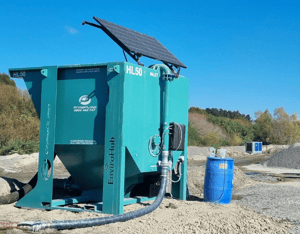
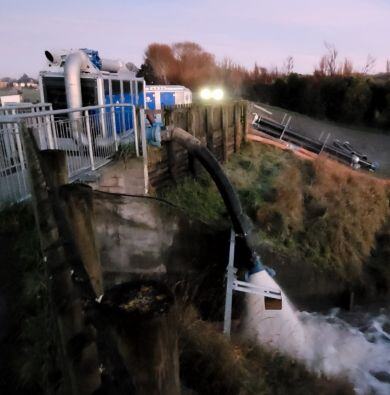
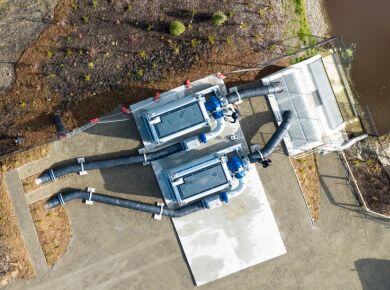
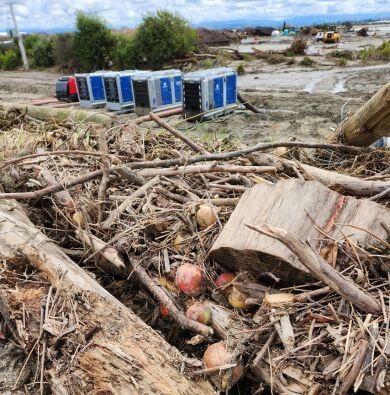
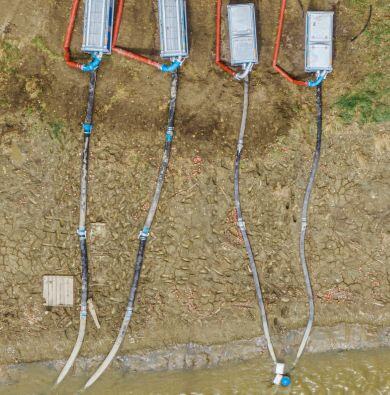
    Here are some examples of our solutions being used.
    Read Dewatering, Bypass & Sewage articles

    See other Dewatering, Bypass & Sewage Pumps

    They brought their mechanics, they didn't just dump it and leave….couldn't have done it without them to be honest

    Mark CadwalladerCatchment Worker

    This sort of unique system you set up is what sets you apart from others in the Market

    Jacob Warmsley Project Manager

    I had an amazing experience with Prime Pump at the Transmission Gully ... will recommend you guys anytime and anywhere.

    Peter FisherDirector

    You guys had our backs from the get-go and stood beside us and persevered.

    DaveOps Director

    We called for a different type of solution…... We were pretty happy with what's been delivered

    Rob KerrProject Director

    Prime supplied us with the best solution for hire and the instant availability was what we needed… We certainly will be using them in the future

    Priscilla EllmersWastewater Supervisor

    Make an enquiry

    Let’s sort your fluid management needs 
    Speak to an expert

    Ricardo Holt

    Ricardo Holt
    Sales Team Leader

    Duncan Moore

    Duncan Moore
    Sales Engineer

    Charlie Petrie

    Charlie Petrie
    Sales Manager

    Questions

    FAQ

    At Prime Fluid Management, we understand that every fluid management challenge brings unique considerations. Here, you’ll find clear, practical answers and expert guidance to help you maximise uptime, achieve regulatory compliance, extend equipment life, and implement the most effective solution for your site. 

    How does a wellpointing system work on site?

    A wellpointing system uses a series of small-diameter wellpoints installed in a line or ring around an excavation. Each wellpoint is a screened inlet, connected via a riser pipe to a header main that runs back to the wellpointing pump.

    At Prime Fluid Management, we pair this layout with positive displacement piston pumps that deliver consistent high pressure, automatically prime, and move a mixture of water and air without restriction. This setup lowers the groundwater level around the excavation, creating a more stable and workable site in New Zealand’s variable soil conditions.

    What do wellpoints, riser pipes (risers) and swing joints do in a wellpointing system?

    In a typical wellpointing setup:

    • Wellpoints or filters are the screened inlet sections installed in the ground that draw groundwater into the system.
    • Riser pipes or risers are the vertical pipes that connect each filter up to the surface and into the header main. 
    • Swing joints are the flexible connections between each riser and the header main, usually incorporating a valve so flow from each wellpoint can be adjusted or isolated as needed.

    At Prime Fluid Management, our wells and accessories range includes steel wells, PVC and self-jetting wellpoints, header pipes and swing joints. Your wellpointing system can be set up and fine-tuned to suit site conditions — or our experienced operations crew can help you configure an optimal system when hiring our equipment.

    Why use slotted screen wellpoints?

    Because different ground conditions call for either slotted screen or wedge-wire wellpoints, slotted screen designs are often used where sand control and steady groundwater intake are needed. At Prime Fluid Management, we supply PVC slotted screen wellpoints, also commonly referred to as spears, which are simple to install, economical and reusable.

    For more substantial groundwater flows or tougher ground conditions, we also supply 150mm (6 inch) steel wells — custom-designed by our team. These ensure fast installation and improved water quality. 

    The slotted screens create a controlled intake area that allows groundwater to enter freely while keeping sand and fines out of the system. This helps protect pumps and maintain system performance over longer operating periods.

    To view the full range of wellpointing pumps and accessories, download our Civil, Quarrying and Mining Product Guide 2026

    What is a jetting lance and how does it work with your jetting pumps and jetting units?

    A jetting lance is the handheld pipe used to install wellpoints. It connects to a high-pressure jetting pump and directs water into the ground to fluidise the soil, allowing each wellpoint and riser to be jetted down to its design depth.

    At Prime Fluid Management, we have jetting pumps and jetting units that are purpose-built for this task — providing compact, high-pressure pumping for installing wellpoints and other jetting applications. Options include skid-mounted units with twin 1,200 L tanks, along with remote-controlled outlets for jetting and dust suppression.

    When is a wellpointing solution the right choice compared with other dewatering methods?

    Wellpointing is often the right choice for shallow to moderate depth excavations where you need controlled drawdown of the groundwater table along a trench or around a structure.

    It’s widely used on New Zealand civil sites for pipelines, shallow foundations, services and pits — particularly in sandy or fine-grained soils where open pumping is not enough to keep the excavation stable.

    At Prime Fluid Management, we design wellpointing solutions around your project requirements, matching piston pumps, wells, risers, swing joints and jetting equipment to local soil conditions, perched water and site constraints. If wellpointing isn’t the best fit, we can also assess alternative options in the dewatering, bypass and stormwater range, including auto-prime pumps and drainage submersible solutions.

    Why use a piston pump for wellpoint dewatering?

    Piston pumps provide reliable suction in unpredictable ground conditions. They use positive displacement to move water and air through a sealed chamber, making them ideal for wellpointing applications where a consistent vacuum must be maintained — even with low or fluctuating inflow. This makes piston pumps highly dependable in unstable soils. 

    At Prime Fluid Management, we supply the BBA PT-Series piston pump range, which offers unmatched economy of use. These pumps are highly fuel efficient and maintenance-friendly, requiring servicing only every 1,500 hours — up to six times longer than standard piston pumps. You can read 

    The PT-Series is available in battery-electric, diesel and hybrid configurations, providing flexible drive options to suit different site requirements. Find out more in our article about BBA Piston Pump efficiency.