Skip to content

Industrial Hygienic Pumps

Efficient and compliant conveyance of high-viscosity food & beverage, pharmaceutical, and cosmetic products

    Safe, maintenance-friendly hygienic pumps

    Hygienic pumps are specially designed for use in industries that require high standards of hygiene including food and beverage, pharmaceutical, cosmetics, and biotechnology manufacturing.
    They are constructed from non-toxic, non-contaminating materials and are designed to:

    • Prevent contamination and ensure product purity
    • Have no dead spaces or defects where bacteria can grow
    • Drain freely
    • Allow easy and thorough cleaning or sterilisation in place (CIP/ SIP)

    Prime Fluid Management supplies pumps that are EHEDG and FDA-certified, and are thoughtfully engineered for ease of maintenance and cleaning once installed.

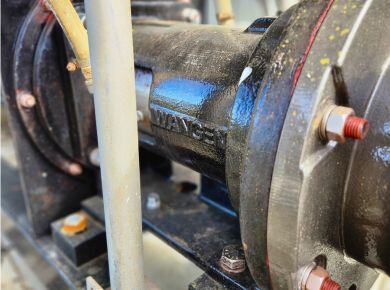
    Wangen Twin Screw

    Gentle handling of non-flowable media

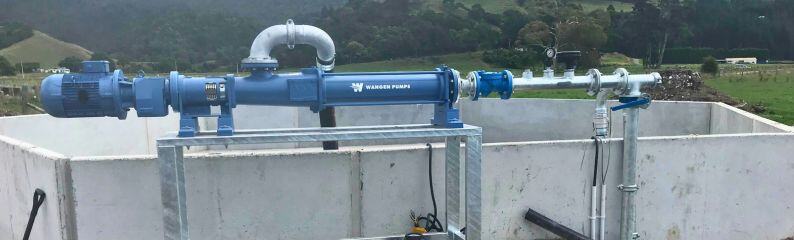
    The Wangen Twin Screw combines advanced technology and service-friendly design for optimal performance and reliability:

    • Service-Friendly Design – spindle replacement without re-synchronisation/ quick seal changes.
    • Wide Pressure Range – up to 30 bar.
    • Gentle & Efficient – high suction lift, low pulsation, reversible pumping, wide viscosity, run dry.
    • Long Service Life – enhanced shaft durability and large housing connectors for greater longevity.
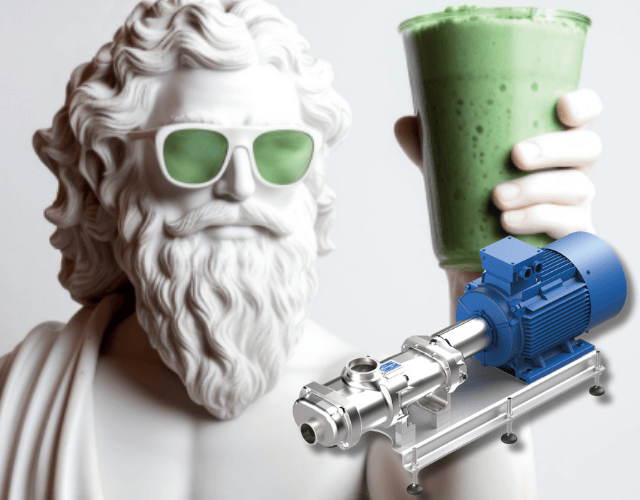
    Gentle handling of non-flowable media
    Wangen Vario Twin NG

    Hopper and conveyor add-on to Wangen Twin Screw

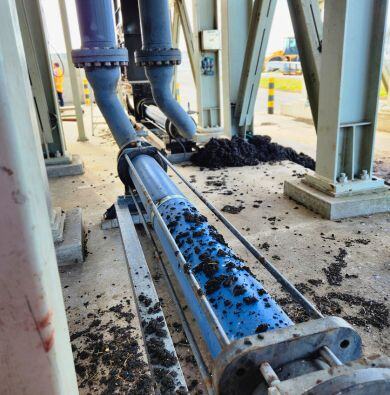
    A patented add-on to the Wangen Twin Screw pump, the Wangen Vario Twin NG with hopper and screw conveyor is designed specifically to pump highly viscous non-flowable media.
    • Coreless screw for ultra gentle product treatment.
    • Cantilevered support of the screw results in minimal residue.
    • Tailor hopper length for optimal application efficiency.
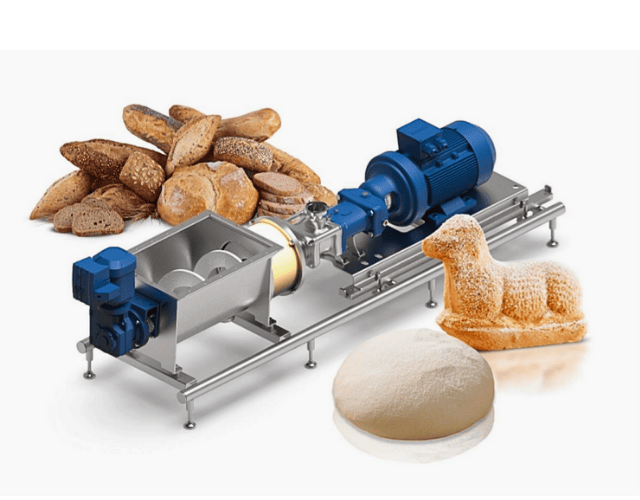
    Hopper and conveyor add-on to Wangen Twin Screw

    Overview of our Hygienic Pumps

    Wangen Hyline PC Pumps

    The Hyline Series by Wangen features flexible and maintenance-free joints, and sedimentation-free design. Convey or dose food and beverages, cosmetics and pharmaceuticals.

    • Max flow: 7m3/hr
    • Max pressure: 20 bar
    • Max solids: 26mm
    Wangen Hygienic PC Pumps

    Wangen’s KB-SL, KL-SL and KL-RF hygienic progressive cavity pumps are tailored to convey low to very high viscosity media.

    • Max flow: 150m3/hr
    • Max temp.: 140°C
    • Max pressure: 48 bar
    • Max viscosity: 200,000 mPa-s
    High Pressure Hygenic PC

    Available as a mobile or stationery unit, the MX-series hygienic progressive cavity pump offers differential pressure up to 80 bar.

    • Max flow: 100m3/hr
    • Max pressure: 80 bar
    • CIP/SIP cleaning possible
    Wangen Twin Screw

    Wangen Twin Screw pumps ensure smooth, gentle pumping of viscous, abrasive or shear-sensitive fluids, with CIP/SIP cleaning and minimal downtime.

    • Max flow: 200 m3/hr
    • Max pressure: 30 bar
    • Max solids: 40mm
    Wangen Vario Twin Screw

    A patented feeder unit for the Wangen Twin Screw pump. Conveys highly viscous, non-flowable media with variable hopper length.

    • Max flow: 10 m3/hr
    • Max temp: 90°C
    • Max viscosity: 3,000,000 mPa-s
    Wangen KB-SL Hygienic

    The KB-SL hygienic progressive cavities pump series offers reliability at low rotational speeds and exceptional operational safety.

    • Max flow: 4.6 m3/hr
    • Max pressure: 48 bar
    • Max solids: 24mm
    Wangen KL-SL Hygienic

    The KL-SL series offers heating and cooling modes, CIP, low pulsation and superior performance over long distances and heights.

    • Max flow: 150m3/hr
    • Max pressure: 48 bar
    • Max solids: 95mm

    Questions? Specifications? Talk to one of our Industrial Specialists today.

    GALLERY

    In the field

    Here are some examples of our solutions being used.
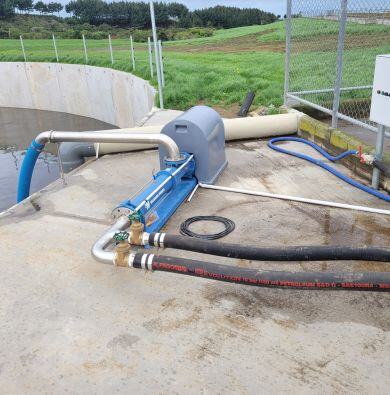
    Read Dewatering, Bypass & Sewage articles

    See other Dewatering, Bypass & Sewage Pumps

    They brought their mechanics, they didn't just dump it and leave….couldn't have done it without them to be honest

    Mark CadwalladerCatchment Worker

    This sort of unique system you set up is what sets you apart from others in the Market

    Jacob Warmsley Project Manager

    I had an amazing experience with Prime Pump at the Transmission Gully ... will recommend you guys anytime and anywhere.

    Peter FisherDirector

    You guys had our backs from the get-go and stood beside us and persevered.

    DaveOps Director

    We called for a different type of solution…... We were pretty happy with what's been delivered

    Rob KerrProject Director

    Prime supplied us with the best solution for hire and the instant availability was what we needed… We certainly will be using them in the future

    Priscilla EllmersWastewater Supervisor

    Make an enquiry

    Let’s sort your fluid management needs 
    Speak to an expert

    Tony Hylands

    Tony Hylands
    Industrial Pumping Solutions

    Kobus van der Merwe

    Kobus van der Merwe
    Industrial Sales Engineer

    Charlie Petrie

    Charlie Petrie
    Sales Manager

    Questions

    FAQ

    At Prime Fluid Management, we understand that every fluid management challenge brings unique considerations. Here, you’ll find clear, practical answers and expert guidance to help you maximise uptime, achieve regulatory compliance, extend equipment life, and implement the most effective solution for your site. 

    How does a wellpointing system work on site?

    A wellpointing system uses a series of small-diameter wellpoints installed in a line or ring around an excavation. Each wellpoint is a screened inlet, connected via a riser pipe to a header main that runs back to the wellpointing pump.

    At Prime Fluid Management, we pair this layout with positive displacement piston pumps that deliver consistent high pressure, automatically prime, and move a mixture of water and air without restriction. This setup lowers the groundwater level around the excavation, creating a more stable and workable site in New Zealand’s variable soil conditions.

    What do wellpoints, riser pipes (risers) and swing joints do in a wellpointing system?

    In a typical wellpointing setup:

    • Wellpoints or filters are the screened inlet sections installed in the ground that draw groundwater into the system.
    • Riser pipes or risers are the vertical pipes that connect each filter up to the surface and into the header main. 
    • Swing joints are the flexible connections between each riser and the header main, usually incorporating a valve so flow from each wellpoint can be adjusted or isolated as needed.

    At Prime Fluid Management, our wells and accessories range includes steel wells, PVC and self-jetting wellpoints, header pipes and swing joints. Your wellpointing system can be set up and fine-tuned to suit site conditions — or our experienced operations crew can help you configure an optimal system when hiring our equipment.

    Why use slotted screen wellpoints?

    Because different ground conditions call for either slotted screen or wedge-wire wellpoints, slotted screen designs are often used where sand control and steady groundwater intake are needed. At Prime Fluid Management, we supply PVC slotted screen wellpoints, also commonly referred to as spears, which are simple to install, economical and reusable.

    For more substantial groundwater flows or tougher ground conditions, we also supply 150mm (6 inch) steel wells — custom-designed by our team. These ensure fast installation and improved water quality. 

    The slotted screens create a controlled intake area that allows groundwater to enter freely while keeping sand and fines out of the system. This helps protect pumps and maintain system performance over longer operating periods.

    To view the full range of wellpointing pumps and accessories, download our Civil, Quarrying and Mining Product Guide 2026

    What is a jetting lance and how does it work with your jetting pumps and jetting units?

    A jetting lance is the handheld pipe used to install wellpoints. It connects to a high-pressure jetting pump and directs water into the ground to fluidise the soil, allowing each wellpoint and riser to be jetted down to its design depth.

    At Prime Fluid Management, we have jetting pumps and jetting units that are purpose-built for this task — providing compact, high-pressure pumping for installing wellpoints and other jetting applications. Options include skid-mounted units with twin 1,200 L tanks, along with remote-controlled outlets for jetting and dust suppression.

    When is a wellpointing solution the right choice compared with other dewatering methods?

    Wellpointing is often the right choice for shallow to moderate depth excavations where you need controlled drawdown of the groundwater table along a trench or around a structure.

    It’s widely used on New Zealand civil sites for pipelines, shallow foundations, services and pits — particularly in sandy or fine-grained soils where open pumping is not enough to keep the excavation stable.

    At Prime Fluid Management, we design wellpointing solutions around your project requirements, matching piston pumps, wells, risers, swing joints and jetting equipment to local soil conditions, perched water and site constraints. If wellpointing isn’t the best fit, we can also assess alternative options in the dewatering, bypass and stormwater range, including auto-prime pumps and drainage submersible solutions.

    Why use a piston pump for wellpoint dewatering?

    Piston pumps provide reliable suction in unpredictable ground conditions. They use positive displacement to move water and air through a sealed chamber, making them ideal for wellpointing applications where a consistent vacuum must be maintained — even with low or fluctuating inflow. This makes piston pumps highly dependable in unstable soils. 

    At Prime Fluid Management, we supply the BBA PT-Series piston pump range, which offers unmatched economy of use. These pumps are highly fuel efficient and maintenance-friendly, requiring servicing only every 1,500 hours — up to six times longer than standard piston pumps. You can read 

    The PT-Series is available in battery-electric, diesel and hybrid configurations, providing flexible drive options to suit different site requirements. Find out more in our article about BBA Piston Pump efficiency.