Pump Types
Auto Prime
Air-operated
Concrete Washdown
Dredge Pumps - Dewatering
Dredge Pumps - Sludge & Slurry
Dredges
Flexi, Trash & Diaphragm
High Head Pumps
Handy-sized Pumps
Lamella Settling Tanks
Peristaltic
pH Correction
Piston Pumps
PTO (auto prime)
Centrifugal
Primary Sludge
Progressive Cavity
Shore-mounted
Stirrers
Submersibles
Proportional Dosing
Settling Tanks & Bag
Submersibles - Drainage
Submersibles - Slurry & Sludge
Stirrers - WWTP
Trash, Flexi & Diaphragm
Water Quality Monitoring
Wellpointing
Chemicals
Food Processing
Fuels & Oils
Hot Oil
Hot Water
Hygienic
Marine
Solids Handling Pumps
Vacuum & Blowing
Viscous Fluids Pumps
Wastewater
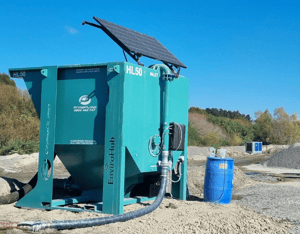
Comprehensive water treatment and monitoring solutions

Industrial wastewater isn’t one-size-fits-all, and neither are the pumps that move it. Whether you’re designing a new plant or keeping existing systems running, you need wastewater pumps that handle the job efficiently—without clogging, failing, or slowing production.
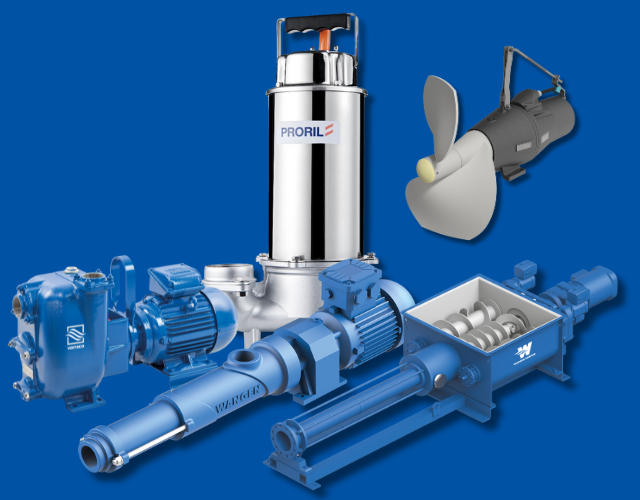
We supply a diverse range of industrial wastewater pumps and stirrers designed to tackle everything from light process water to thick sludge and fibrous waste. With options including submersible and surface-mounted pumps, cutters, and stirrers, we’ll help you find the right fit for your plant.
Our Industrial Team are industry-trained and offer in-depth knowledge of industrial pumps and systems. Choose from our extensive range of:
We supply genuine parts for the pump brands we carry, with stock of common wear parts held locally in New Zealand. Our dedicated Industrial team works closely with supply partners to ensure we provide the right parts and expert advice.
We’re committed to keeping your pumps in top condition.
Ideal for handling tough wastewater applications with high dry solids content, ensuring reliable and robust performance.
Designed for optimal wastewater treatment, preventing sedimentation and ensuring efficient media movement.
Designed for high flow, low pressure situations where transfer of thick slurries is required.
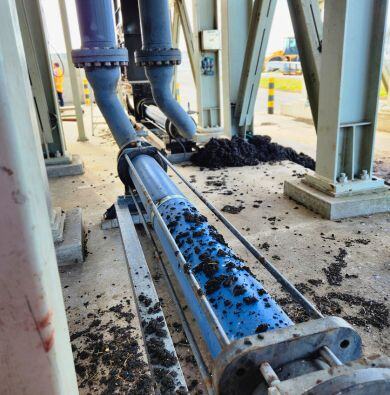
Wangen produces an extensive range of hopper feed pumps for slurries and pastes with high solids content (KL-R Series) and dewatered sludge (KL-RU, KL-RQ, KL-RS and KL-R Triplex models).
Corrosion-resistant, durable submersibles used to transfer clean or slightly contaminated water up to 40 degrees.
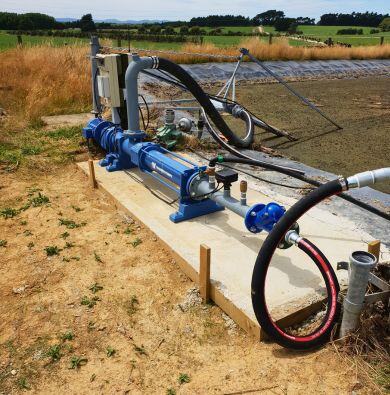
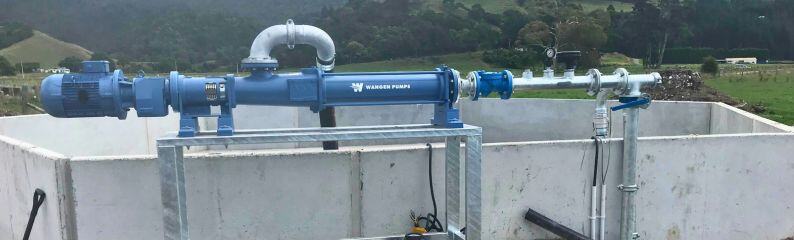
Wangen's KL-S, KB-S and KB22S self-priming PC pumps convey high viscous media up to 200,000mPA-s with or without solids. The KB22S is designed specifically for dosing.
The Hyline Series by Wangen features flexible and maintenance-free joints, and sedimentation-free design. Convey or dose food and beverages, cosmetics and pharmaceuticals.
The AM Series bronze, self-priming centrifugal pumps have a double volute body. Use for bilge, deckwash, fire prevention or ballast.
Varisco J-Series pumps suit applications that require fast priming from demanding suction heights, and the ability to manage polluted, waste and abrasive fluids with suspended solids.
SolidsPro stirrers are used to ensure uniform mixing in waste liquids with solids present, to prevent sedimentation and enhance biological or chemical reactions. Commonly used to agitate dairy effluent storage sumps/tanks & ponds to prevent solids from settling out.
Engineered to resist clogging SolidsPro vortex submersibles feature recessed impellers with large free passage. Ideally suited to pumping large volumes of waste fluids where solids or particle are present.
Wangen KL-T Series Progressive Cavity Immersion pumps safely convey media from tanks and pools with high metering accuracy even at low rpm.
Varisco J-Series pumps suit applications that require fast priming from demanding suction heights, and the ability to manage polluted, waste and abrasive fluids with suspended solids.
Prime Fluid Management supplies genuine parts for our pump brands, holding stock of common wear parts in New Zealand.
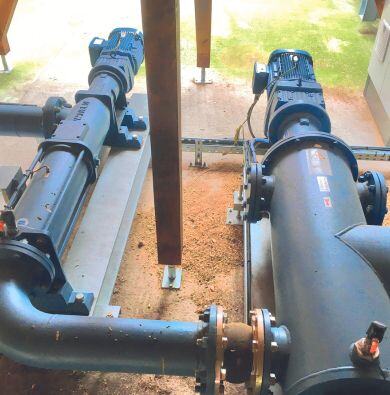
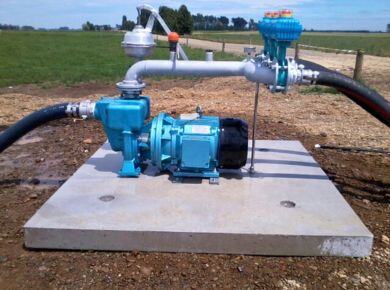
Here are some examples of our solutions being used.
At Prime Fluid Management, we understand that every fluid management challenge brings unique considerations. Here, you’ll find clear, practical answers and expert guidance to help you maximise uptime, achieve regulatory compliance, extend equipment life, and implement the most effective solution for your site.
On a lot of drawings and pump schedules, dry-prime pump or dry-prime dewatering pump is used as shorthand for a surface pump that can handle air and doesn’t need manual priming. In practice, the auto-prime units that Prime Fluid supplies are vacuum-assisted pumps with a dedicated priming system, so they meet the intent of most “dry prime” specs while giving you a modern, quieter and more efficient package.
Auto-prime units are usually the better option when the pump has to sit above the water, suction conditions might change, or you expect a lot of air to enter the line during setup and operation. A self-priming dewatering pump or submersible can still be the right choice on simpler, more static jobs, and Prime can talk you through which option will be more reliable and cost-effective for your site.
Yes – Prime can supply auto-prime packages as diesel dewatering pump sets or electric sets, depending on what power you have available and how the system will run. With the right control panel and level sensors, those same units can be configured as an automated pump or “auto water pump” that starts and stops itself, which is helpful on remote or 24/7 sites where you don’t want someone constantly watching the pump.
Auto-prime units are a good fit for temporary flood control pumps because they can be moved quickly, cope with long suction and discharge lines, and re-prime themselves as water levels change. Prime Fluid can set up high-flow Auto-prime Pump solutions for New Zealand councils and contractors that form part of a wider flood or stormwater contingency plan.
To match an Auto-Prime Pump New Zealand job, one of our sales engineers will usually ask for your required flow, total dynamic head, suction depth, discharge route, expected solids size and how long the pump needs to run. If your documents mention terms like autoprime dewatering pumps, auto vacuum pump or use a generic “dry prime” note, sending those details through with a simple sketch of the setup helps the team recommend the most suitable package for your project.