

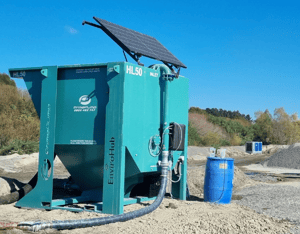

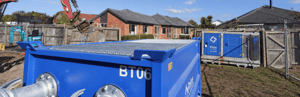
A bigger settling tank isn't always the answer to cloudy site water. Across New Zealand, sand in groundwater can settle readily, while finer sediment may stay suspended much longer.
What matters is how the sediment behaves – not just how much water you're pumping.
We compare standard, hybrid and lamella clarifier settling tanks. We also explain how sediment, pumping arrangements and site requirements influence equipment selection.
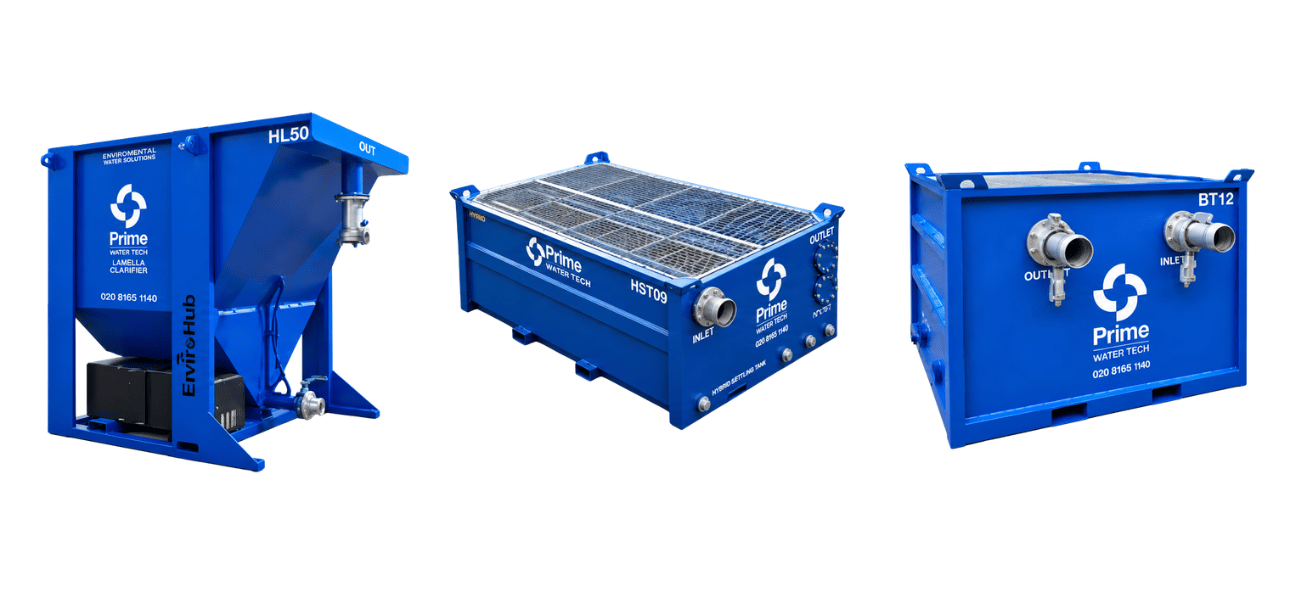
Prime's lamella clarifier, hybrid and standard settling tanks
Key takeaways
- Start with the water – sediment type and settling behaviour help determine which equipment suits the job.
- Consider the pumping setup – intake position and flow affect how much sediment reaches treatment equipment.
- Match treatment to site requirements – space, discharge limits and sludge handling can influence your site setup.
How quickly does the sediment settle?
Before recommending equipment, Prime's Christchurch team typically asks for a 20L water sample and carries out a simple bench test – to check how readily the sediment settles and whether it needs further treatment.
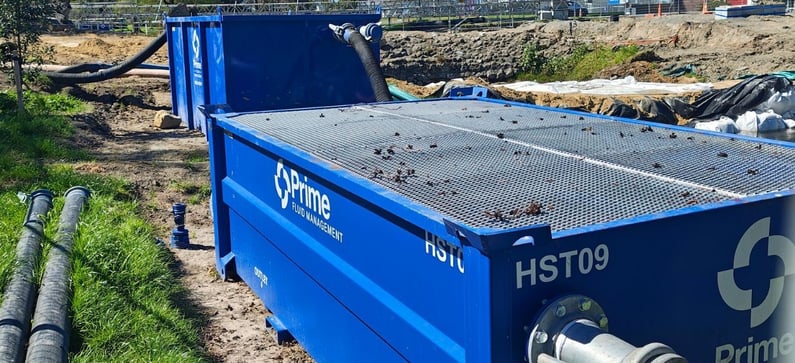
A hybrid settling tank and extra water treatment equipment in use on a construction site in Napier
How do the three settling options compare?
Standard, hybrid and lamella tanks all use gravity to separate sediment from water. Their internal designs provide different settling areas.
|
Equipment |
How It Works |
When To Consider It |
|
Standard settling tank |
Baffles control water flow, giving solids time to settle |
For pre-settling or when there’s sand, course silt or other readily settling solids |
|
Hybrid settling tank |
Baffles and honeycomb media increase the available settling area |
When a standard tank needs extra settling capacity within a compact setup |
|
Lamella clarifier |
Closely spaced inclined plates provide substantial settling area in a compact footprint |
Finer settleable solids, tighter discharge requirements or limited site space |
How does pumping affect settling tank selection?
How groundwater is collected can affect the amount of sediment reaching a settling tank.
Wellpointing systems often produce relatively clear water, while pumping directly from an active excavation can draw in more sediment as digging disturbs the ground.
On an Auckland job, Prime suggested positioning a submersible pump inside a separate PVC well rather than directly in an active excavation. The aim was to reduce the amount of disturbed sediment entering the treatment equipment.
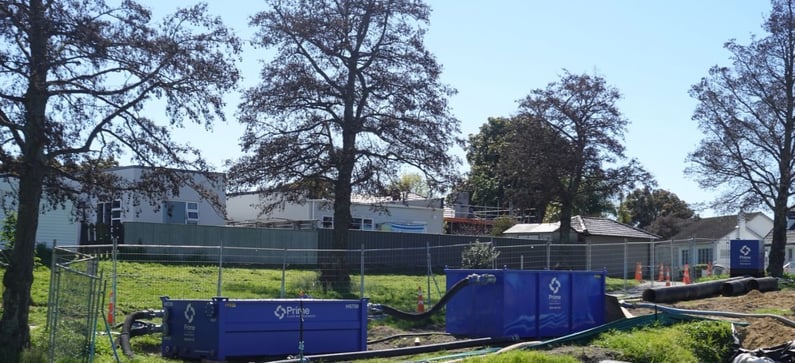
Hybrid settling tank connected to another treatment tank on site in Napier
When is a standard settling tank not enough?
When sediment takes longer to settle, a standard tank may not achieve the required discharge quality on its own. Hybrid or lamella tanks provide additional settling area, while chemical dosing can help finer suspended particles bind together and settle.
On a wellpointing job in Blenheim, site restrictions influenced how Prime arranged the settling tanks.
Stacking isn't suitable for every job. It depends on tank design, ground support and installation requirements.
Can settling equipment keep up with dewatering?
The treatment setup needs to handle the required pumping rate without slowing dewatering.
But water moving too quickly through a settling tank gives suspended solids less time to settle – potentially affecting discharge quality.
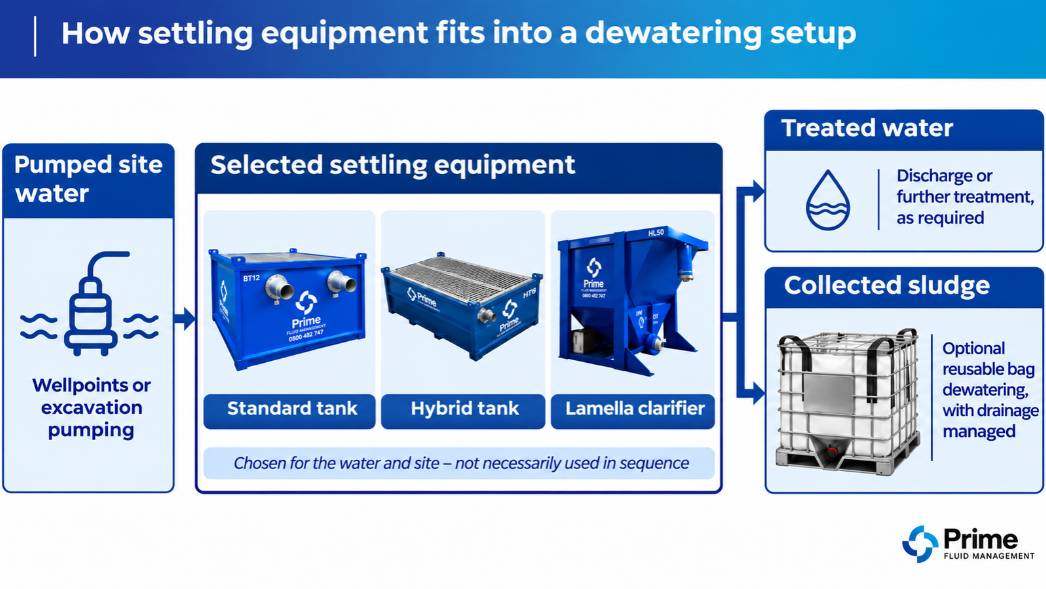
Plan water treatment before pumping starts
Before choosing settling equipment, consider:
- Water characteristics – sediment type, settling behaviour and potential changes in sediment loading
- Pumping arrangement – expected and peak flows, plus intake position
- Discharge requirements – consent limits, sampling and any further treatment
- Site constraints – available space, ground support, pipework, access and sludge removal.
Getting Prime involved early leaves more time to assess the water and plan where treatment equipment will go.
Explore Prime's settling tanks and bags and EnviroHub lamella clarifiers – or speak with our team about your water treatment requirements.