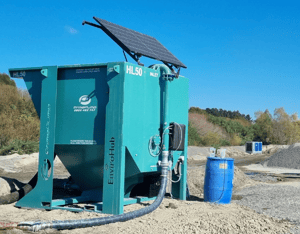

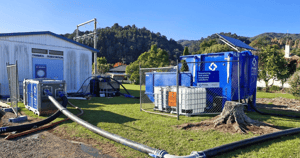
Most dewatering jobs follow a familiar pattern: pump the excavation, settle out the sediment, check the water and discharge it. Contaminated groundwater during construction interrupts that pattern. Dissolved metals, hydrocarbons or water with an unusual pH can turn a routine excavation into a hold point, with crews waiting and water building up on site.
With a clear sequence of steps and the right people involved, these situations are very manageable. Environmental consultants work out what is in the water and what has to change before it can be discharged. Prime’s role is the practical part: designing and running portable treatment that brings the water up to that standard on your site.
This guide covers the warning signs, what to do first, and how contaminated groundwater treatment is set up and monitored before anything leaves the site.
How do you manage contaminated groundwater during construction?
Contaminated groundwater must be tested and treated to meet discharge requirements before it leaves a construction site. The process involves identifying contaminants, containing suspect water, selecting suitable treatment and monitoring water quality. Prime Fluid Management provides portable treatment solutions for contaminants such as suspended solids and hydrocarbons as standard, with custom solutions for dissolved metals and minerals.
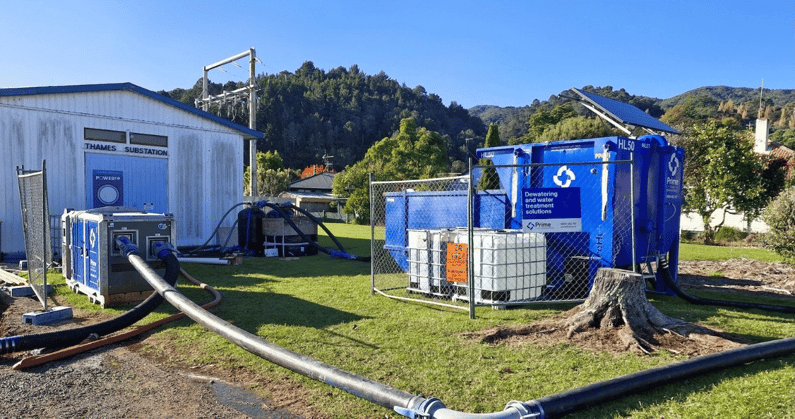 A custom water treatment setup to treat arsenic and manage pH in a single system.
Start with the site history before you dig
Contaminated groundwater management starts well before the first bucket of soil comes out. Go through the developer’s existing reports and site history for any earlier testing, and check exactly what was tested. Former orchards, landfills and industrial sites deserve a closer look.
Soil samples and geotechnical reports are useful, but they don’t necessarily tell you what’s in the construction site groundwater. If the site history raises concerns, or the project requires it, test the groundwater itself before excavation begins.
What you find feeds into the project’s management plans. On larger projects, water management is usually set by an Environmental Management Plan and an Erosion and Sediment Control Plan, and chemical use is guided by a Chemical Treatment Management Plan. Any treatment on site has to fit within these documents, so it pays to have them settled early.

How do you know if groundwater is contaminated?
During excavation and groundwater dewatering, look out for:
- an unexpected smell
- unusual staining or colour
- an oily film on the water
- buried waste uncovered during digging
- treatment that suddenly stops working as expected (worth checking, although it doesn’t always mean contamination)
Sometimes there’s nothing to see or smell. On a recent project in Northland, testing picked up dissolved zinc in a storage pond that had to be emptied before civil works could go ahead. The water needed specialist treatment before it could enter the stormwater network and the nearby harbour.
Bench testing and contaminant testing are two different things. We often run jar tests to see how water settles and responds to treatment, which helps us choose a chemical and work out the dose. A jar test won’t tell you whether dissolved zinc or arsenic is present. That takes laboratory analysis, arranged by your environmental specialist.
If something unexpected turns up, keep the suspect water contained on site and bring in the environmental specialist. If you don’t already have one, we work with environmental consultants and laboratories and can put you in touch.
What to do once contamination is confirmed?
While you wait for lab results, follow the project’s contamination response procedure. That usually means containing or diverting the suspect water. You may need to pause digging or pumping, but get the engineer’s advice before you switch off any construction dewatering pumps.
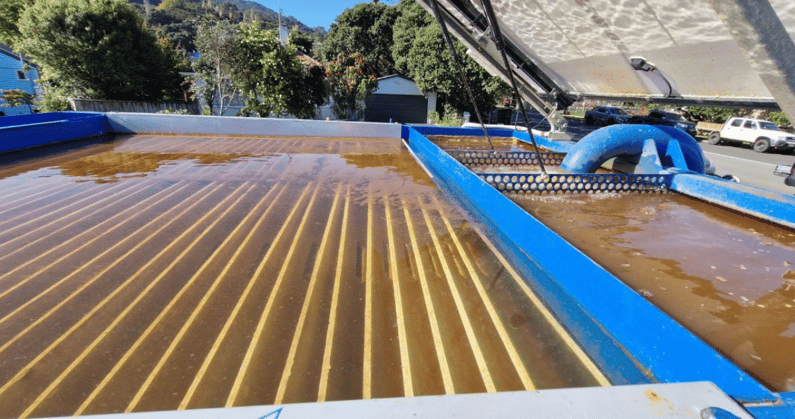
Custom set-up treating water for contaminants.
This is often when Prime gets a call. A straightforward job has gone sideways, and the contractor needs to hold or treat water that their usual setup can’t handle. From there, the process generally looks like this:
-
Understand what needs treating. The environmental specialist reviews the results and advises what has to change before discharge. We can help you make sense of the report.
-
Choose the treatment. This could mean removing sediment, adjusting pH, separating oil or using specialist filters, confirmed through bench testing or treatment trials.
-
Size the equipment. Treatment capacity has to keep up with the incoming water, with enough storage to cover any stoppages.
-
Check before discharge. Site checks and lab tests confirm the treated water meets requirements. Clear water can still contain dissolved contaminants.
-
Monitor during discharge. Record results, and hold or divert the water if it stops meeting requirements.
-
Dispose of waste. Sludge and used filter material need appropriate disposal.
Portable water treatment options on site
Sediment removal, site runoff treatment and pH correction are routine applications for portable water treatment systems. Prime supplies settling tanks, lamella clarifiers and dosing equipment to buy or hire, with hydrocarbon separators and oil skimmers available across all our settling tanks. Other contaminants need a site-specific treatment approach. We work with the contractor's environmental consultant and/or our laboratory partners to establish what needs removing, which treatment processes are suitable and the order in which they need to happen. Environmental consultants guide testing and monitoring requirements; laboratory partners help establish chemical selection and use.
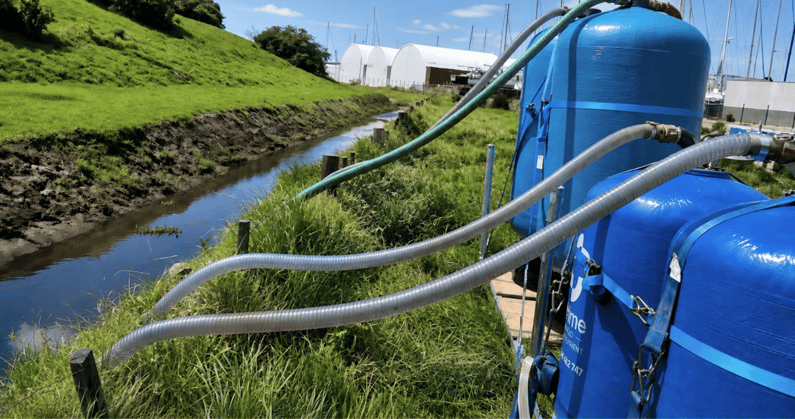
Prime applied an industrial technique to manage dissolved heavy metals in a shipyard pond.
Prime’s role is to turn those requirements into a working system on site: sizing and configuring the equipment, integrating the required dosing and treatment stages, and commissioning the setup.
That distinction determines the level of support required. For routine sediment control, contractors may hire equipment and manage installation and operation themselves. Specialist contaminant treatment forms part of our Design & Installation or Full Service Operation service. With the former, we commission the system and train the contractor’s team to operate it. With the latter, we also manage ongoing operation, monitoring and reporting to the project’s requirements.Portable systems can be adjusted as conditions change, but on-site treatment is not always practical. Available space, incoming water volumes, treatment performance and approved discharge options all influence whether water can be treated on site or needs off-site disposal.
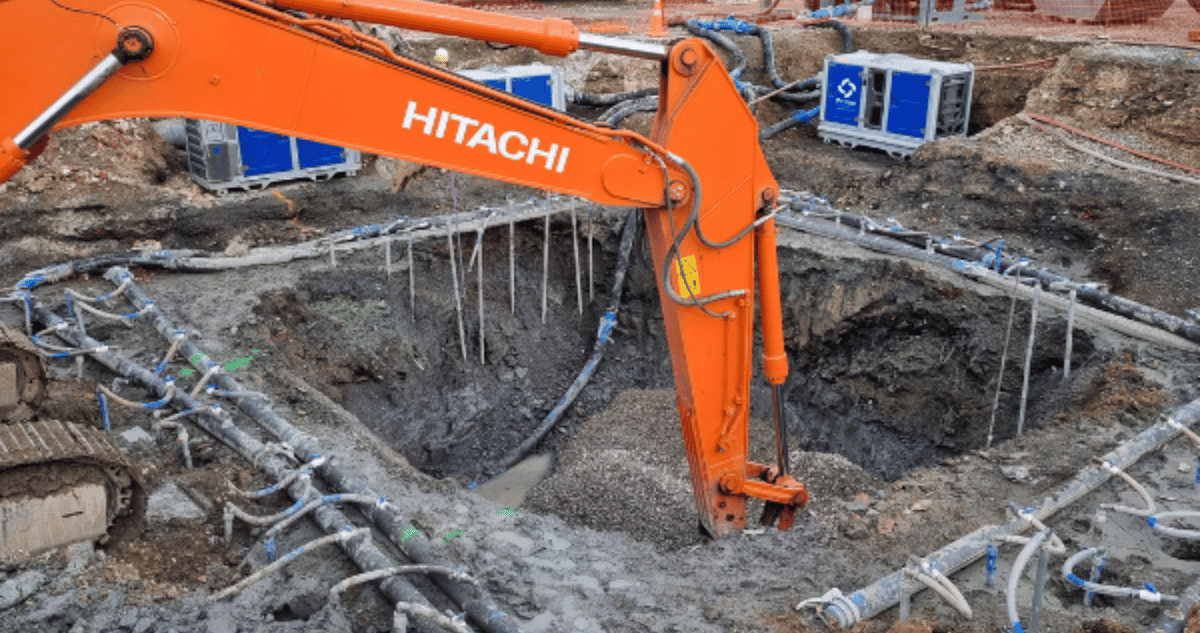
Coastal and waterway-adjacent sites require careful water treatment management.
Discharge rules and consents
Start with where the water is going. Discharging to land, a stream or a council network can involve different rules. In New Zealand, regional councils (or unitary councils such as Auckland Council) manage groundwater takes and discharges under the Resource Management Act and regional plans. Stormwater discharges also need approval from the network owner, and wastewater discharges usually need a trade waste consent or agreement.
Permission to pump groundwater doesn’t automatically mean you can discharge it, so check both sides of the job. There’s no single set of limits for every site either. Typical checks cover suspended solids and turbidity, pH, oil and other contaminants, flow rate and volume, and effects at the outlet and downstream.
The consent may also set out treatment methods, sampling, record keeping and what to do if treatment fails. Your environmental consultant can confirm which rules and approvals apply, and we work alongside them to turn those requirements into a practical treatment setup.
Getting the right people involved
Managing contaminated groundwater during construction works best when everyone knows their role. Consultants identify the contaminants and set the targets, councils and network owners approve the discharge, and a treatment partner makes it work on site. As an IECA member with Site Safe Gold certification, Prime brings both the equipment and the site experience to that last step.
If your excavation has turned up water your usual setup can’t handle, our team can help you find a portable treatment solution that keeps the project moving. Get in touch with Prime Fluid Management to talk through your site.