


Site water carrying silt and sediment can be treated in several ways, depending on the water, available space and the result you need to achieve. Where gravity settling is suitable, options can include settling ponds, tanks or incline plate settling.
A lamella clarifier uses incline plate settling to provide a large settling area within a relatively small footprint. Closely spaced angled plates give suspended solids a shorter distance to settle before they slide down into the sludge hopper.
So why use inclined plates instead of relying on a larger settling tank or pond – and what actually happens to the water once it enters a lamella clarifier? Here’s how the process works.
Key takeaways
- Inclined plates shorten the distance solids need to settle.
- Proportional dosing follows flow, not sediment levels – if pond water becomes muddier, the chemical dose may need adjusting.
- Sludge removal doesn't have to stop treatment – check build-up through the sight glass and remove sludge while the clarifier keeps running.
What happens inside a lamella clarifier?
When site water needs gravity settling but a large settling pond isn’t practical, a lamella clarifier provides a large settling area within a much smaller footprint.
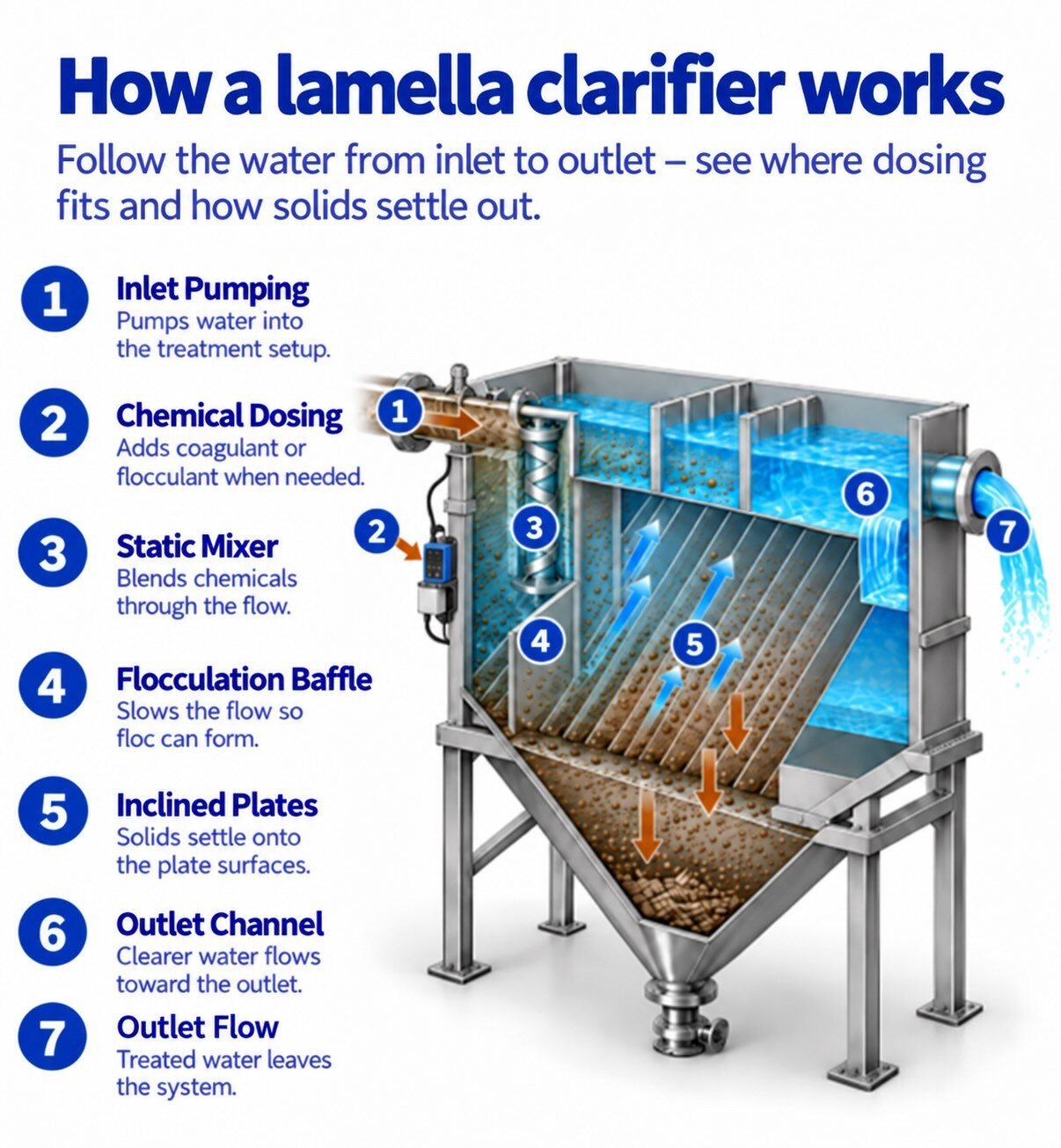
A lamella clarifier is a settling tank that uses closely spaced inclined plates to remove suspended solids such as silt and sediment from water. Water rises between the plates while solids settle onto them and slide down into the sludge hopper. Clearer water continues to the outlet.
The key advantage is the amount of settling area packed into the tank. Instead of relying on one large open settling area, the plates create multiple settling surfaces within the same footprint.
Why are lamella plates inclined?
The close spacing and angle of the plates work together to shorten the distance suspended solids need to travel before they reach a settling surface.
If the plates were vertical, particles could fall between them much like they would in a baffled settling tank. Inclining the plates puts a surface in the path of the settling particles. Once solids collect on the plates, gravity helps them slide down into the sludge hopper.
This combination of close spacing and inclined surfaces is what allows a lamella clarifier to provide a large effective settling area without needing a large tank or pond.
When does chemical dosing help?
Fine particles don't always settle quickly enough under gravity alone. A coagulant or flocculant helps them form larger clumps that settle more easily.
Test the water before setting the dose. Sediment levels can vary across a large pond, so one sample may not give you the full picture.
Proportional dosing adjusts chemical feed as water flow changes, but it doesn't measure sediment levels. If incoming water gets muddier, another water test may show that the dose needs changing.
Find out more about Prime’s manual and proportional dosing systems.
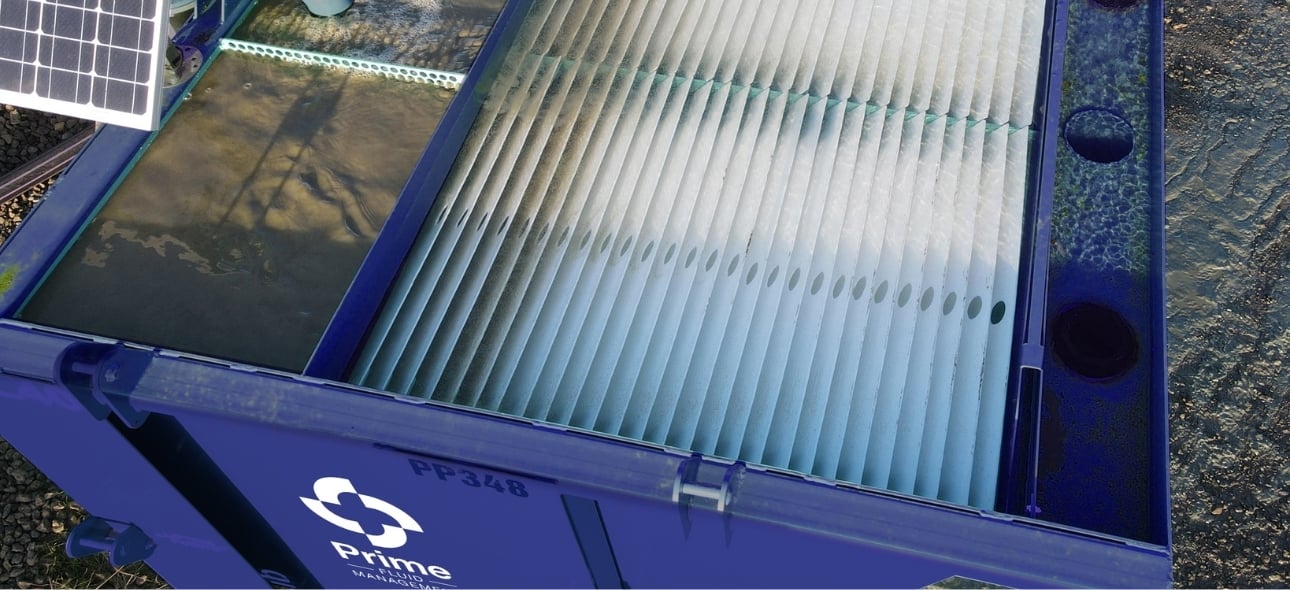
Inclined plates and inlet section of a lamella clarifier
Where does the sludge go?
Solids slide off the plates and collect in the sludge hopper. The steep-sided hopper helps direct settled solids towards the bottom – making them easier to evacuate.
On Prime’s EnviroHub lamella clarifiers, a sight glass lets you see sludge building up in the hopper. Sludge can then be removed through the bottom valve – usually using a sucker truck – while the clarifier keeps running.
How often you need to remove it comes down to flow and solids loading. For an EnviroHub HL50 treating high volumes of water with a heavy solids load, that could mean daily or every second day. With lower flows and lighter solids loading, the interval can be longer – with the sight glass helping you judge when to remove the sludge.
Where space and your environmental management plan allow, sludge can also be directed to a designated sludge pond while the lamella clarifier continues operating.
What affects performance on site?
A lamella clarifier performs best when the flow, settling behaviour of the solids and site setup all work together.
| Factor | Why it matters |
| How readily the solids settle | Different particles settle at different rates. Actual throughput depends on how easily the solids separate from the water – not just the clarifier’s rated capacity. |
| Flow rate | Water needs enough time in the clarifier for solids to settle. If the flow is too high for the water being treated, some particles may carry through with the outlet flow. |
| Level stable ground | A full clarifier is heavy. If the tank settles unevenly on soft ground, it can tilt and affect the water level inside the unit – potentially causing water to spill over the side. |
Use a firm, level base that can support the full operating weight of the tank.
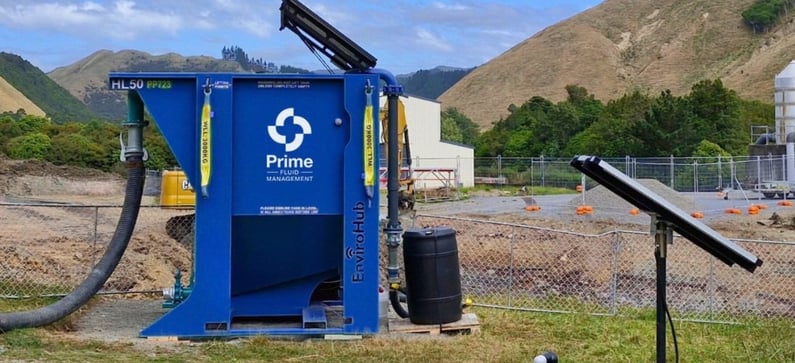
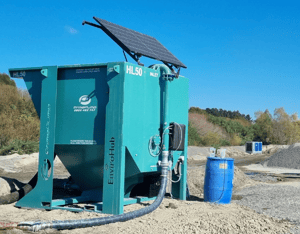
EnviroHub HL50 lamella clarifier stable on a flat ground site
How does a lamella fit into a water treatment system?
Some sites use a settling pond or tank first to remove heavier sediment, leaving the lamella to clarify the water further. Where space is limited and water conditions allow, a lamella clarifier may replace the pond.
You may also need pH correction, water quality monitoring or both. Removing sediment doesn't guarantee the water meets your site's discharge requirements.