



Procurement teams are often asked to choose a pump on the strength of a quote. Two units look similar on paper, one carries a lower price, and the decision seems straightforward. The trouble is that the purchase price rarely reflects what a pump will cost over the years it runs.
Long-term operating and maintenance costs are where the real costs sit, and they vary enormously depending on the application. A pump that looks cheap at the point of purchase can turn out to be the more expensive option once servicing, parts, energy and downtime are counted. Comparing pumps properly means looking past the invoice and asking how each one will hold up in your application over its full working life.
This is not a calculation with a single answer, since the figures depend on too many things specific to your site. What follows is a way to think about the comparison so you know which questions to ask before you commit.
Key takeaways: Comparing industrial pumps for long-term maintenance costs at a glance
- The purchase price is only one part of what an industrial pump costs over its working life; energy, servicing, parts and downtime can have a much greater impact.
- A lower-priced pump can become the more expensive option if its materials, design or application fit lead to higher maintenance or operating costs.
- Energy, servicing, replacement parts and downtime are the main costs to compare when assessing a pump's long-term maintenance requirements.
- Pump duty hours, the material being handled, equipment age, and application conditions can significantly change lifetime maintenance costs.
- The right comparison needs to be based on the actual duty and site conditions rather than a like-for-like quote or headline purchase price.
- There is no single maintenance cost that applies to every industrial pump, so whole-of-life costing gives you a more useful basis for comparing options.
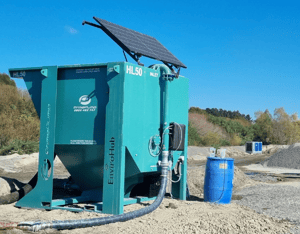
 Chemical pump in an industrial setting
Purchase price is a small part of the total
Over a typical service life, the upfront cost of an industrial pump is usually a minor share of what you spend on it. The larger figures come later, spread across operating costs, servicing, replacement parts and the productivity lost when a pump is out of action.
That is why a like-for-like price comparison misleads. A lower purchase price often signals cheaper materials or a design that is less suited to your duty, both of which tend to raise costs down the track. The pump that wins on the quote can lose badly over ten years of operation.
Chemical transfer is a good example. The right choice is often a magnetic drive centrifugal pump: the outlay is high because of the materials and the sealless design, but operating costs stay low, with few wearing parts and no mechanical seal to fail. A standard pump bought at a quarter of the price looks like the better deal until its seals and elastomers, which were never compatible with the media, begin to fail. What follows is a run of repairs, attempts to lift the pump to a spec it was never built for, and eventually replacement, with lost production on top.
Whole-of-life costing corrects for this. Rather than comparing what two pumps cost to buy, you compare what they cost to own and run for as long as you expect to keep them. Over a working life, energy alone can be the single largest cost, often outweighing the purchase price many times over.
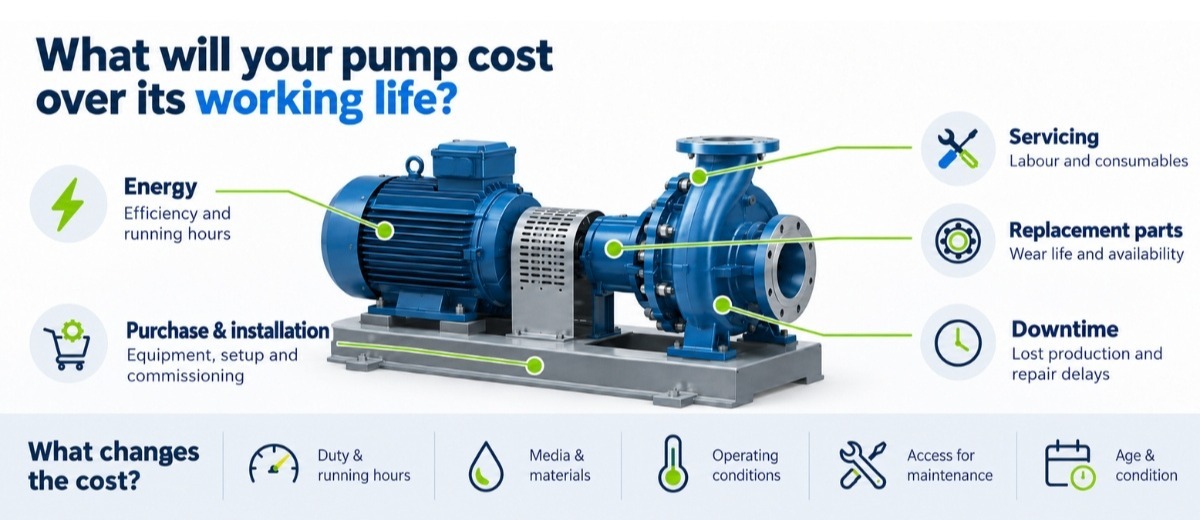 Diagram with the main factors that add up over a pump's life
The costs that add up over a pump's life
When you weigh one pump against another for the long term, these are the areas worth pricing out rather than the purchase figure on its own:
- Energy and operating costs. Often the largest lifetime cost, driven by efficiency, motor sizing and how many hours the pump runs.
- Servicing. Scheduled maintenance, labour and consumables, which scale with duty hours and the materials being moved.
- Replacement parts. Wear components such as seals, bearings, diaphragms, check valves, rotors, stators (depending on pump type), and impellers, along with how often they need changing.
- Downtime. The production or service lost while a pump is offline, plus the cost of holding spares or waiting on lead times.
- Application fit. The wrong pump for the media or duty inflates every other cost on this list, including possible replacement.
Servicing is where the "it depends" becomes obvious, and much of it is decided at selection. Corrugators use air-operated double diaphragm pumps to move and circulate starch, which contains caustic soda and so needs materials that can cope with it. Stainless steel with EPDM seals is the sound choice: more expensive up front, but it will run for the life of the plant on low annual maintenance.
Cast iron gets requested to save on materials, with its handling weight overlooked, and aluminium is picked at around a third of the price even though its internals will oxidise and pit until they leak. Both options end up repaired or scrapped, well above what the correct pump would ever have cost to maintain.
Parts follow the same pattern, and what wears first depends on the pump. A centrifugal pump works through its impeller, mechanical seal, wear plate and bearings; a hose pump wears only its hose; a diaphragm pump its diaphragms, valve balls and seals; a slurry pump its replaceable rubber lining, which is there to protect the casing. What the pump handles and how fast it runs sets how quickly those parts go, so two identical pumps can carry very different parts bills depending on where each one is working.
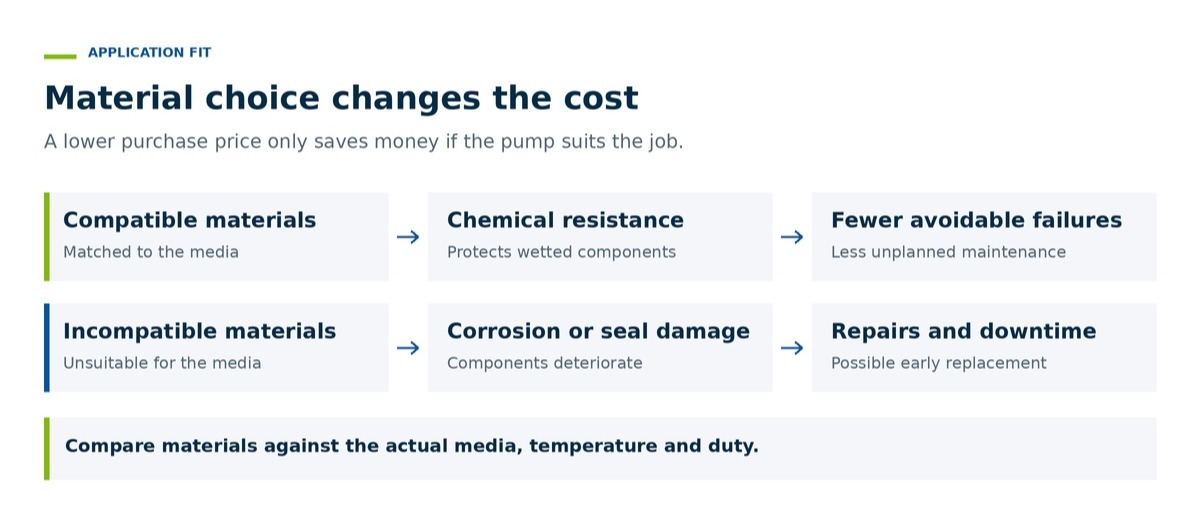 Diagram explaining how the pump's material influences industrial pump ownership costs
The variables that move the numbers
Every figure above changes with the specifics of your site, which is why a general price comparison struggles to tell you much. Selection itself sets most of the cost: whether the duty calls for a centrifugal or a positive displacement pump (decided by flow rate, pressure, temperature, specific gravity, viscosity and the duty itself), and then the material it is built from, anything from polypropylene or PTFE through cast iron and stainless steel to an exotic alloy. Seal and elastomer choices sit on top of that.
Duty hours are the most direct driver. A pump running a few hours a week and one running around the clock face completely different wear and energy profiles, even if they are the same model. Materials matter just as much: solids, abrasives, temperature and chemical aggression all shorten component life and raise how often a pump needs servicing.
Where the pump sits counts too, since a unit in a remote location costs more to keep running simply because reaching it is harder, and whether it could be serviced on site or requires a specialised workshop.
Age plays in too. As a pump moves through its service life, parts and servicing costs generally climb while efficiency drifts, which changes the sums on whether to keep maintaining it or replace it. Industrial pumps run for around 15 years as a rule, though external conditions, media temperature, running speed, abrasiveness and duty all move that figure, as does whether the pump is maintained by qualified technicians on genuine parts.
Because these variables interact, the honest answer to "which pump is cheaper to maintain" is that it depends on how and where you run it. Work out the comparison against your real duty and you get a figure you can plan around. Headline prices won't get you there.
Key factors that influence long-term pump costs
|
Cost factor |
What affects long-term pump costs |
|
Pump selection |
Flow rate, pressure, temperature, specific gravity, viscosity and duty determine whether a centrifugal or positive displacement pump is suitable. |
|
Materials and components |
Pump materials, seals and elastomers must suit the fluid being handled. Solids, abrasives, temperature and chemical aggression can shorten component life and increase servicing frequency. |
|
Operating hours |
Pumps running continuously typically experience different energy consumption and wear patterns from those operating only a few hours a week. |
|
Location and accessibility |
Remote locations can increase maintenance costs due to travel, access difficulties and the need for specialised workshop servicing. |
|
Age and condition |
Parts and servicing costs generally increase as pumps age, while efficiency may decline. Industrial pumps typically last around 15 years, depending on operating conditions, duty and maintenance quality. |
|
Maintenance practices |
Qualified technicians and genuine replacement parts can help maintain performance and extend service life. |
Getting a comparison you can rely on
There is no single number waiting at the end of this, and that is the point. Comparing industrial pumps on long-term maintenance cost means matching each option to your duty, your materials and your uptime requirements, then pricing the full working life rather than the purchase.
Sometimes a lower-cost pump genuinely is the right call. Knowing when takes someone who understands the application, your requirements and what a failure would actually cost you, which is why our industrial team works every enquiry through a consultative process before recommending anything.
A comparison built around your site will always beat one built on a spec sheet. To weigh your options against how the pumps will really run on your site, talk to Prime Fluid Management today.