/Logo/Prime_logo_web_colour.svg)
/Logo/Prime_logo_web_white.svg)
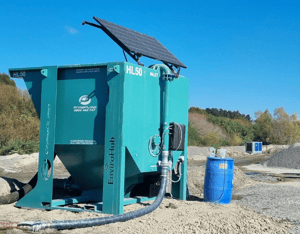


As wastewater gets treated, solids are concentrated into sludge, while the liquid continues through the process as effluent. Moving these streams calls for different types of pump.
Centrifugal pumps handle many of the liquid duties – from moving raw sewage to transferring effluent after most of the solids have been removed.
As sludge thickens and becomes harder to move, progressive cavity pumps and some centrifugal designs, such as screw centrifugal pumps, are more often used. Both handle solids, but they suit different duties:
-
Progressive cavity pumps move thicker, more viscous sludge at a steady, controlled rate.
-
Screw centrifugal pumps use a screw-shaped impeller designed to pass solids and fibrous material.
Key takeaways – Wastewater treatment plant pumps at a glance
- As wastewater gets treated, solids are concentrated into sludge while the cleaner liquid continues as effluent. These changing conditions call for different types of pump.
- Centrifugal pumps handle many liquid duties – from solids-laden raw sewage to treated effluent.
- Progressive cavity pumps provide steady, controlled flow for thicker, more viscous sludge.
- Screw centrifugal pumps use a screw-shaped impeller to improve passage of solids and fibrous material.
Where do different pump types fit in wastewater treatment?
Start with what’s being pumped – that quickly narrows the options. Here are some common pairings.
| What is being pumped? | Common Pump Types | Why It Fits |
| Raw wastewater (sewage) | Solids-handling centrifugal | Wide internal passages let rags, fibres and solids pass through with less risk of blockage |
| Unthickened sludge | Centrifugal, including screw centrifugal | The sludge is still flowing readily. Solids-handling designs let fibres and suspended solids pass |
| Thickened sludge | Progressive cavity | The rotor/stator design moves thicker, more viscous sludge through sealed cavities at a steady, controlled rate |
| Dewatered sludge | Specialist progressive cavity like hopper-fed | A hopper and feed screw push sludge into the pump when it no longer flows freely |
| Treated effluent | Centrifugal | With most solids removed, a conventional centrifugal pump works efficiently with no need for solids-handling hydraulics |
| Treatment chemicals | Dosing | Meters chemicals at a controlled rate, keeping the treatment dose consistent |
Hidrostal's screw centrifugal impeller in action
Why use centrifugal pumps for raw sewage duties?
Raw sewage may contain rags, wipes, fibres and other suspended solids. In a solids-handling centrifugal pump, the size and shape of the flow passages and impeller geometry affect how easily that material moves through the pump.
Larger, less obstructed passages give solids room to pass – while the impeller design influences whether fibrous material sheds or collects around it. Build-up may reduce flow and efficiency before eventually causing a blockage.
The right hydraulic design depends on what’s coming through the pump and what matters most – passing solids, avoiding ragging or maintaining efficiency. In practice, that might mean:
- A screw centrifugal or vortex impeller – where free passage and solids handling are priorities.
- A channel impeller – where solids handling needs to be balanced with hydraulic efficiency.
- A cutter or grinder design – where fibrous material needs to be reduced rather than passed intact.
Hidrostal is an established wastewater pump specialist that uses screw centrifugal hydraulics for solids-handling duties. Its FreeFlow design is intended to reduce solids build-up around the impeller and mechanical seal.

Hidrostal horizontal screw centrifugal pumps at a wastewater treatment plant
The station layout is also important. Pumps may sit in the wet well or be dry installed where access for maintenance is easier.
How does sludge consistency affect pump choice?
The pump type depends on how the sludge behaves. Screw centrifugal pumps can work well with relatively fluid sludge, whereas progressive cavity pumps are better suited as sludge thickens and becomes more viscous.
When are screw centrifugal pumps used for sludge?
While sludge is still relatively fluid, screw centrifugal pumps provide an open solids-handling passage that gives fibres and suspended solids room to pass.
What makes progressive cavity pumps effective for thicker sludge?
As sludge thickens, it becomes harder to feed and move. The rotor turns inside the stator, moving thicker sludge through the pump with a steady, low-pulsation flow.
Inside a Wangen Progressive Cavity Pump
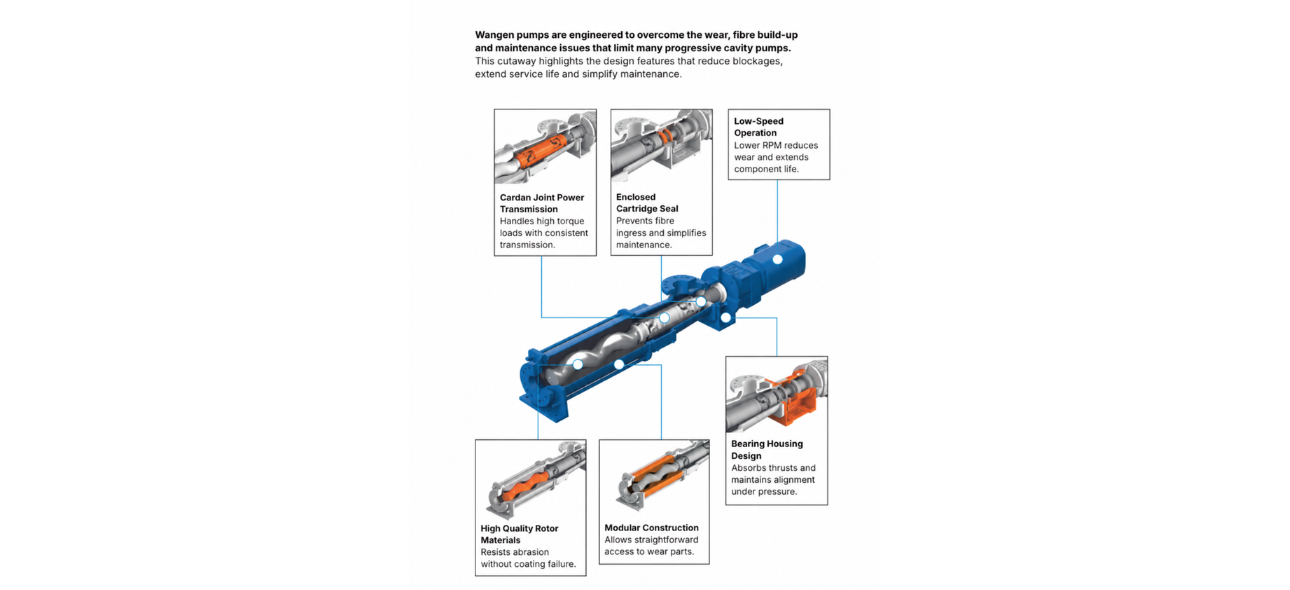
Once sludge is dewatered, it may no longer flow freely into the pump. Hopper-fed designs help feed the thicker sludge into the pump more effectively.
Don’t choose the pump on treatment stage alone – look at the sludge consistency and how readily it flows.
Selecting a wastewater pump in practice
Choosing the pump type is only part of it. The pump still has to match the actual duty.
See how changing wastewater conditions, hydraulics and installation affect pump fit across the treatment process – when meeting the duty point isn’t enough.