/Logo/Prime_logo_web_colour.svg)
/Logo/Prime_logo_web_white.svg)

Frequent clogging. Premature wear. Pumps that don’t perform as expected.
Industrial wastewater isn’t clean water. Depending on the site, it may contain solids, fibrous material, fats, plastics, chemicals or high-temperature liquids – all of which affect how pumps perform.
Selecting the wrong pump can lead to downtime, excessive maintenance and compliance risk. But with the right information upfront, these problems are largely avoidable.
This guide explains the pumps used across industrial wastewater systems, what drives pump selection, and the pump problems often seen on site.
Insights come from Ben Petrie – Agricultural Specialist at Prime Fluid Management.
Key takeaways – Industrial wastewater pumps at a glance
- Industrial wastewater pumping is application-driven – there’s no one-size-fits-all solution.
- Wastewater characteristics and hydraulic conditions determine pump type and materials.
- Pipe size, pipe length and inline equipment create friction losses that affect pump sizing.
- Incorrect pump selection leads to downtime, premature wear and compliance risk.
- Accurate flow, head and wastewater data improve reliability and long-term performance.
Common industrial wastewater pump types
Several pump technologies are used in industrial wastewater systems. The right choice depends on solids content, fluid characteristics, installation constraints, and operating conditions.
Open impeller centrifugal pumps
Centrifugal pumps are typically used as wastewater transfer pumps where high flow rates and continuous operation are required. They work well when solids loading is moderate and efficient transfer over distance is needed.
In applications requiring self-priming capability, pumps like Varisco’s J-Series are often specified.
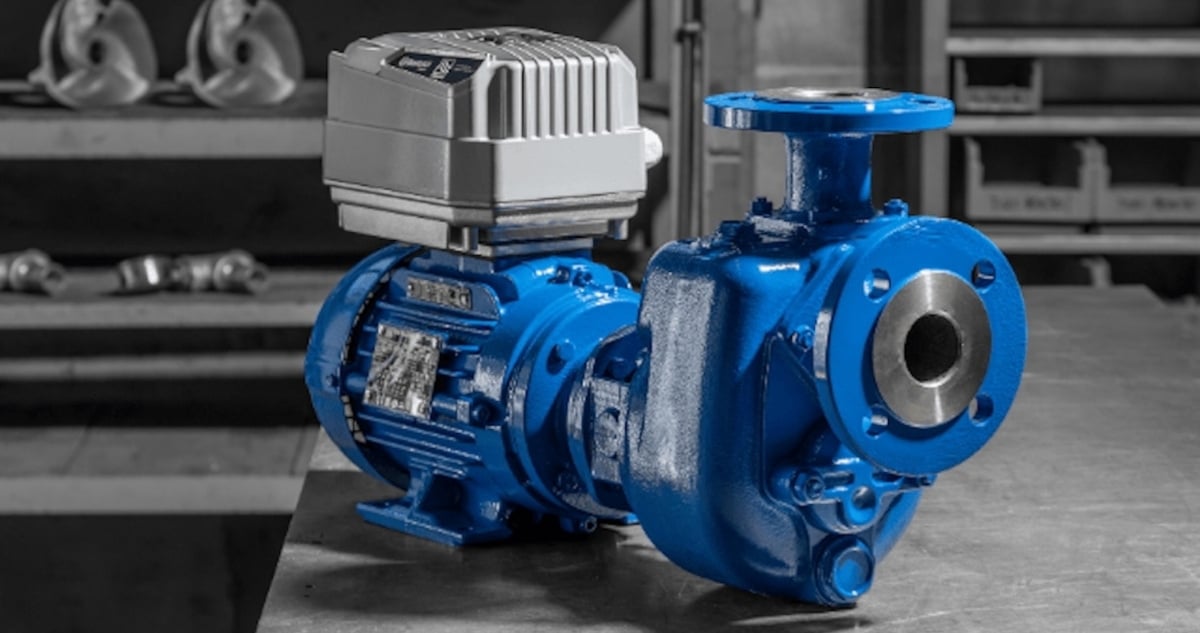
Varisco J-Series self-priming centrifugal pump for industrial wastewater use
Diaphragm pumps
Diaphragm pumps are suited to abrasive sludge, viscous fluids or chemically aggressive wastewater – where conventional pumps would experience excessive wear.
Submersible wastewater pumps
Industrial submersible wastewater pumps are installed directly in pits, tanks or wet wells – and are designed for solids handling. They’re often used where space is limited or the pump must operate below ground.
Progressive cavity pumps
Progressive cavity pumps are commonly used for sludge, slurry and high-viscosity wastewater – where steady flow and strong solids handling are required.
Other pump types such as rotary lobe and peristaltic pumps may also be used depending on the wastewater characteristics and application.
View our industrial wastewater pump solutions used across site and plant applications.
What drives wastewater pump selection?
Flow rate alone doesn’t drive pump selection. In most industrial wastewater systems, the pump choice comes down to:
- What’s in the wastewater
- How the system is built
- What the pump needs to achieve.
Wastewater itself varies widely. Depending on the site it may contain solids, fibrous material, fats, plastics, chemicals or high-temperature liquids.
Three practical questions usually guide pump selection.
What's in the wastewater?
Solids size, fibrous material, abrasiveness, temperature and chemical content influence pump type and materials.
What are the hydraulic conditions?
Flow rate, vertical lift, pipe length and pipe diameter determine the head the pump must overcome.
What does the system need to do?
Some pumps transfer wastewater between points – while others must deliver pressure at the destination or operate continuously in critical processes.
Pipe diameter, pipe length and inline equipment such as valves or meters also create friction losses – increasing the head the pump must overcome.
That’s why wastewater pump selection is rarely one-size-fits-all.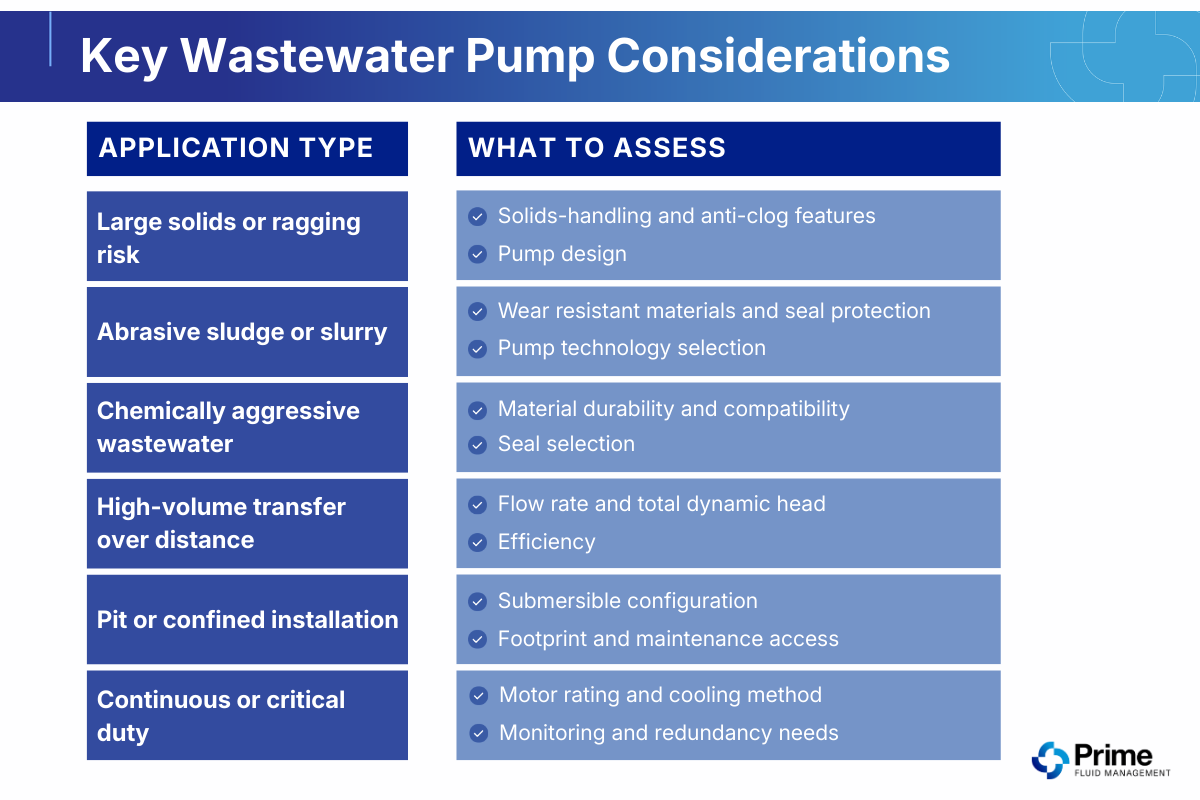
Wastewater pump problems seen on site
Many wastewater pumping problems don’t start with equipment failure – they start with the wrong pump for the application.
One of the biggest issues is blocking or ragging. Industrial wastewater often contains fibrous material, plastics or solids that standard pumps can’t handle.
Even pumps designed for wastewater can struggle when it contains:
- Fibrous material or ragging
- Sludge or high solids content
- Fats, oils or grease
- Abrasive particles.
Solids handling capability is usually the deciding factor. If the pump can’t pass the solids in the wastewater stream, clogging and wear follow quickly.
Wastewater also varies widely between industries – so pump selection must match the application.
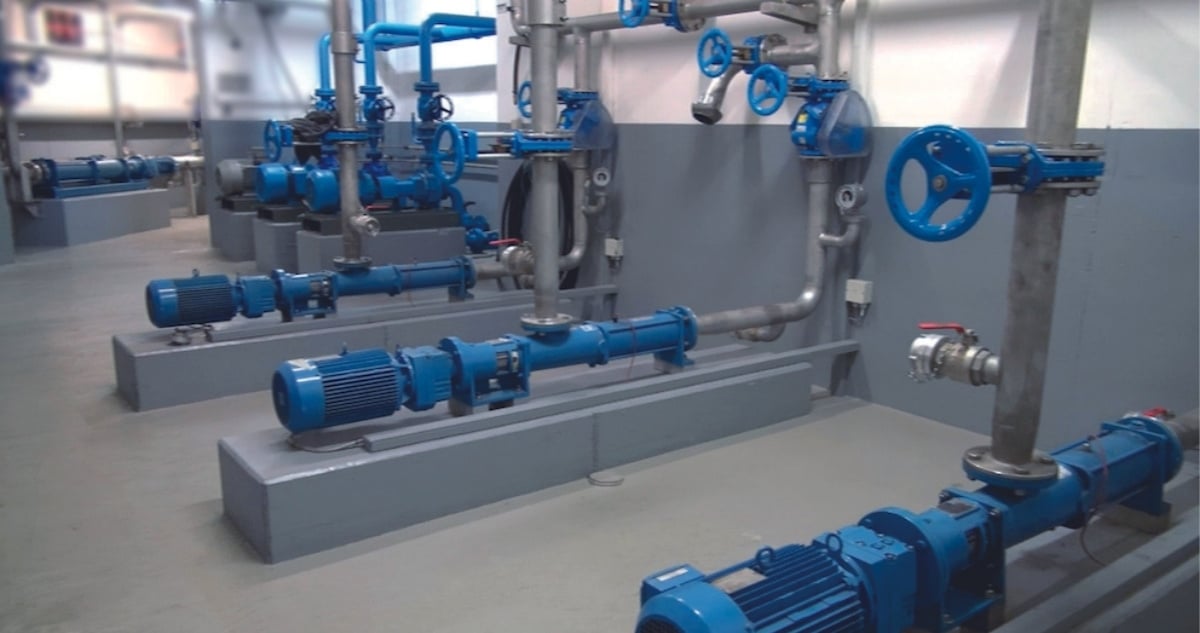
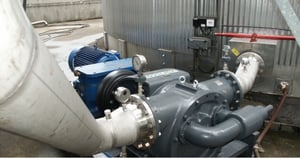
Industrial Wangen pumps for sludge and viscous wastewater transfer
How wastewater pump projects typically run
Industrial wastewater pump projects usually follow a simple process to ensure the pump suits the wastewater, hydraulics and site conditions.
1. Application review
Understanding the wastewater – including solids, temperature and chemical content.
2. Hydraulic assessment
Reviewing flow rate, pipework layout, vertical lift, and discharge conditions to determine required head.
3. Pump selection and installation
Selecting the appropriate pump type and configuration.
4. Servicing and support
Maintaining reliability through routine servicing and adjustments.
At Prime Fluid Management, this process helps ensure industrial wastewater pumps are matched to the application and operate reliably on site.
Contact Prime Fluid Management to ensure your industrial wastewater pump is correctly specified for performance, reliability and compliance.