/Logo/Prime_logo_web_colour.svg)
/Logo/Prime_logo_web_white.svg)
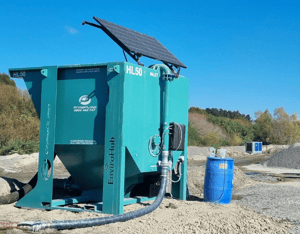

Bypass, dewatering, water take, and treatment systems are often planned around "what equipment do we need?" A more useful question might be "what risks does this temporary setup need to manage?"
A temporary dewatering, bypass or water treatment setup may be protecting everything from live sewer networks to work sites, to sensitive nearby waterways. Failure can be catastrophic - for the public, client, site and environment, with project delays, compliance, environmental harm and public disturbance all real risks.
Key takeaways – Temporary systems at a glance
- Temporary systems can carry critical project risk.
- Planning should start with failure consequence – not pump size.
- Redundancy, alarms, monitoring and response need early planning.
- Discharge quality and consent requirements should be checked early.
- The right setup must work on paper and on site.
What should you consider before planning a bypass or dewatering setup?
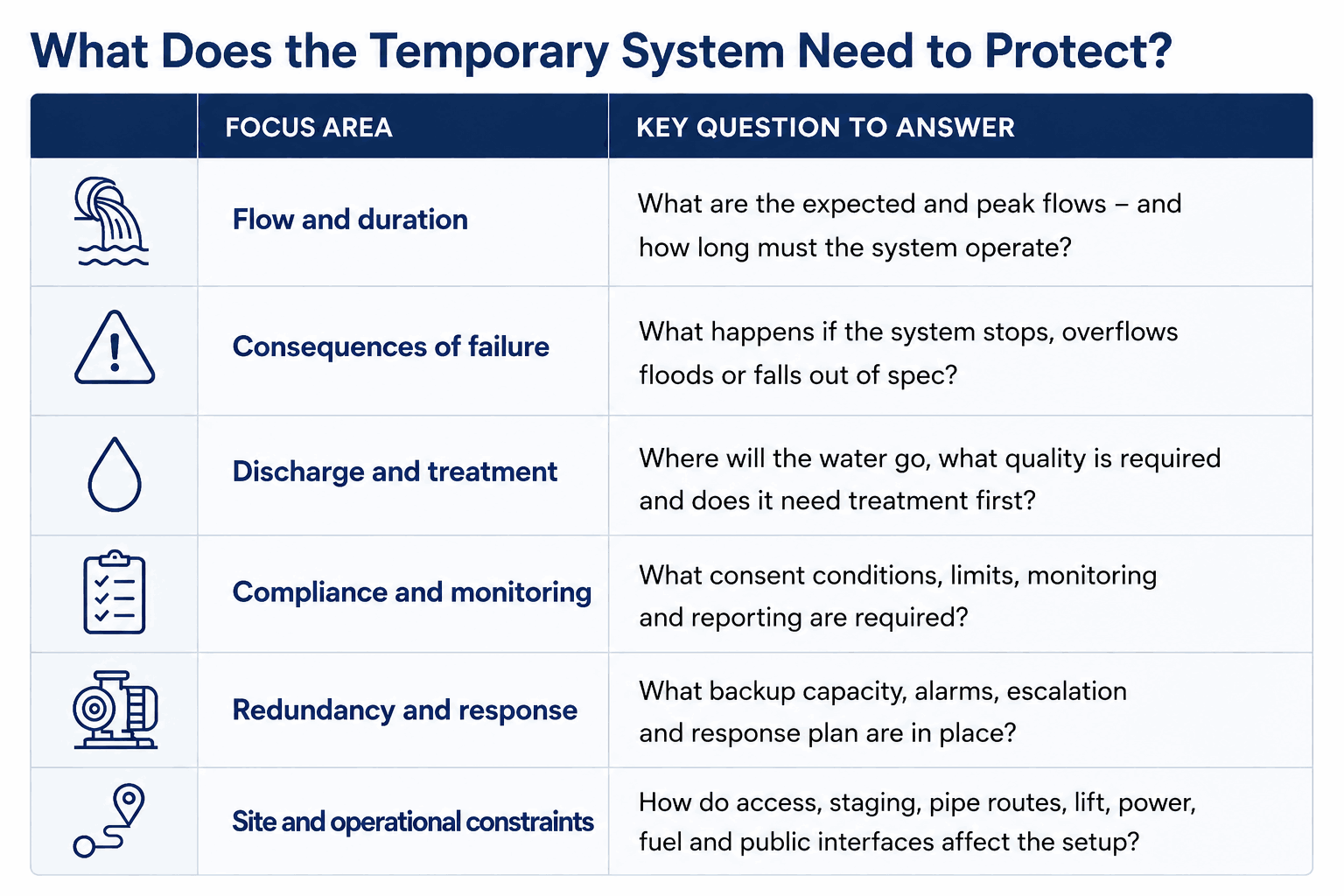
Start by understanding the consequences of failure. Before selecting equipment, consider what happens if the bypass stops, inflow increases, discharge limits are exceeded or the site loses access. Also clarify:
- Who gets the alarm?
- Who responds?
- What the backup plan is?
On live sewer bypasses, the temporary system effectively becomes the operating network. During Western Trunk works in Lower Hutt, a live sewer bypass had to manage peak wet-weather flows of around 350-400 litres per second – while relining continued on a critical trunk sewer near SH2 and the Hutt River.
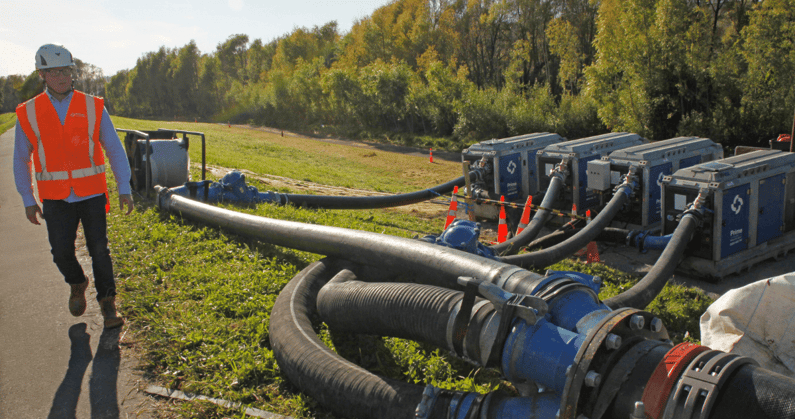
Western Trunk sewer bypass in Lower Hutt – with redundancy built in before flow was diverted
Why is redundancy important in temporary pumping and bypass systems?
Redundancy reduces failure risk by ensuring backup capacity is in place before the setup goes live. For high-risk bypass work, that may include:
- Backup pumps already connected
- Alarm systems and escalation paths
- Fuel or power contingency
- Remote monitoring
- Defined response procedures.
On Western Trunk, these measures were designed-in before flow was diverted.
How does monitoring reduce project and compliance risk?
Monitoring helps project teams identify issues early, stay within consent limits and respond before small problems become project delays.
On the Ōtaki to North of Levin (O2NL) project along SH1, water had to be transferred across a 24km corridor using multiple extraction points, pond transfers and consent-controlled water take.
The system checked stream flows, controlled pumping and maintained water for dust suppression. Effective monitoring shows whether:
- Teams are operating within consent limits
- Water storage is adequate
- Pumps are performing as expected
- Intervention is required.
When is water treatment needed before discharge?
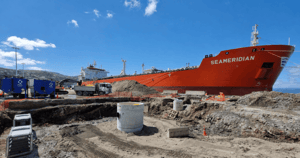
Treatment may be required when groundwater contains sediment, hydrocarbons, heavy metals or other contaminants that can’t be managed through settlement alone. At CentrePort in Wellington, dewatering and treatment had to work together. The site involved contaminated groundwater, hydrocarbons, sludge, tidal influence and strict discharge requirements. The job wasn’t just dewatering – it was managing groundwater and treatment as one system.
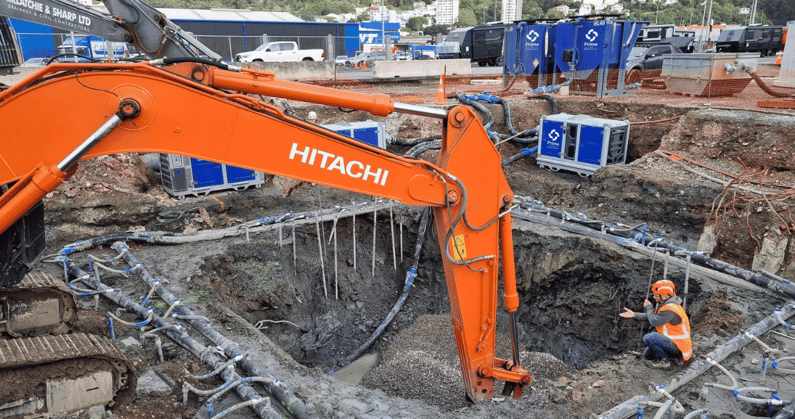
Dewatering and treatment working together at CentrePort – a constrained Wellington marine site
A recent Whangārei water polishing project presented a different challenge. Dissolved heavy metals called for treatment beyond conventional settlement, because the issue was in the water itself, not just suspended material.
Test early, understand the discharge limits and choose the treatment approach early.
Design for the site – not just the flow
A temporary system still has to work in real site conditions.
Pipe routes, treatment space, fuel access and changing conditions affect what’s practical. On constrained sites, pump capacity is only part of the decision.
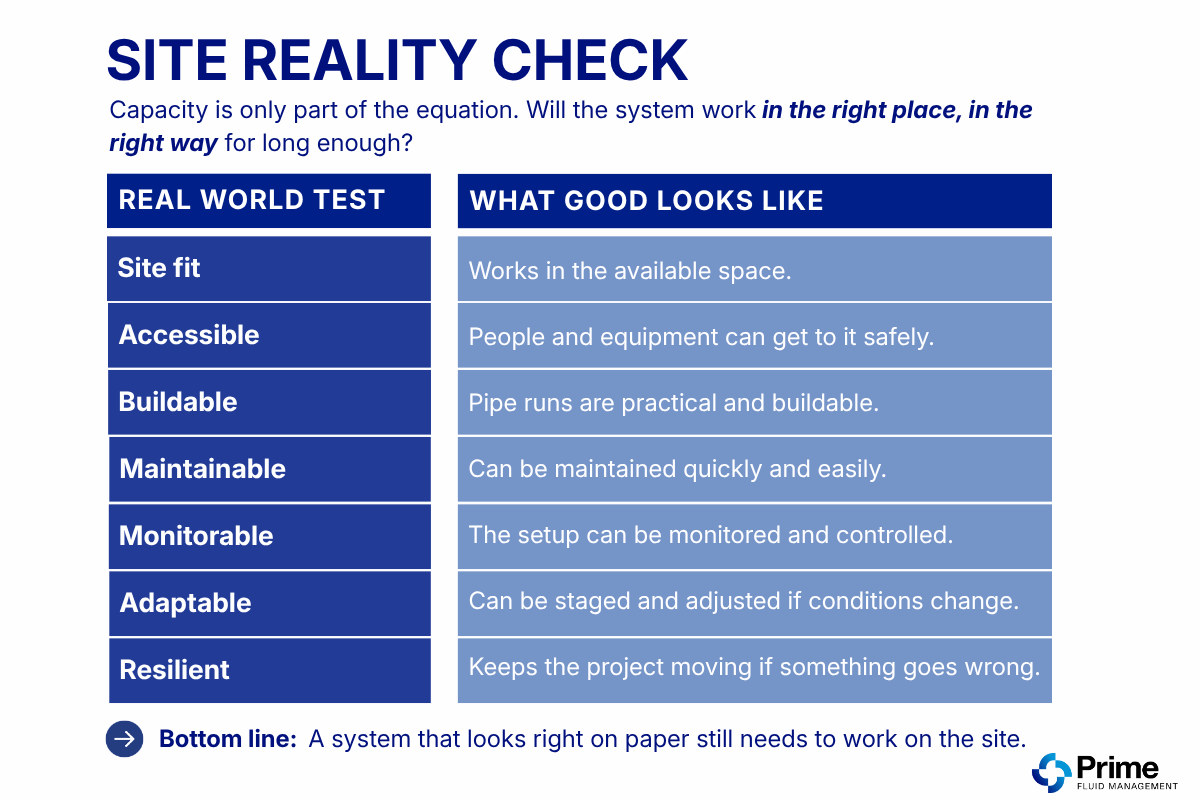
What experienced project teams do differently
Experienced project teams think about temporary works earlier. They:
- Identify risks before selecting equipment
- Plan redundancy before the setup goes live
- Confirm discharge limits before water becomes a problem
- Understand who’ll operate, maintain and respond once it’s running.
Experienced teams scale the planning to the risk – so the system is as robust as the job requires.
Plan the system around the risk
Temporary works are often judged by what doesn’t happen. The bypass keeps running. The excavation stays dry. The discharge remains within limits. The programme keeps moving because risks were planned early. When a temporary system carries critical delivery risk, it needs the same level of planning as the permanent asset.
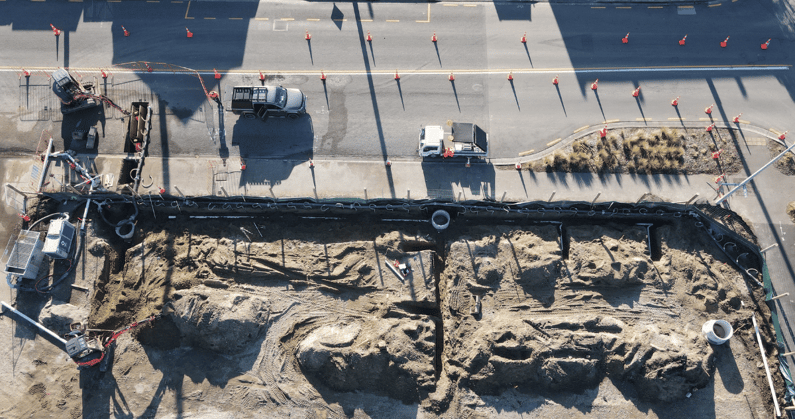
Tidal groundwater management during dewatering works in New Brighton