/Logo/Prime_logo_web_colour.svg)
/Logo/Prime_logo_web_white.svg)
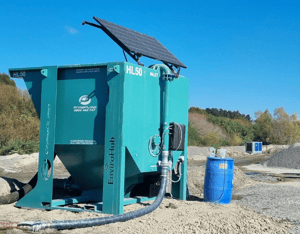

Most civil projects plan for groundwater – but once work begins, it’s rarely predictable.
Site investigations, bore logs, and dewatering plans all help set expectations. Once digging begins, however, groundwater doesn’t always behave the way the report suggests. It moves through soils and layers you can’t see, and if it isn’t controlled properly, it quickly becomes a safety, programme, and compliance issue.
That’s why wellpointing is specified on so many civil projects – not as a reaction to groundwater once it appears, but as a way to control it before excavation starts dictating the programme.
Although wellpointing is widely understood in theory, it can be misunderstood in practice. In this blog, we explain how a wellpointing system works on site, the difference between wellpointing and surface water dewatering, and what’s involved in installing and running a wellpoint system.
We also draw on real-world experience from Richard Haywood, Senior Project Manager Hire Operations at Prime Fluid Management – who works with wellpointing systems on NZ construction sites.
Key takeaways – Wellpointing at a glance
-
Wellpointing is a temporary method of groundwater control used to lower the water table around an excavation.
-
It helps keep excavations dry, soil stable, and work moving safely.
-
It’s most effective for shallow groundwater in sandy or silty soils – which are common across many regions of New Zealand.
-
Wellpointing provides localised control within a defined work area – it doesn’t permanently change groundwater conditions.
-
Successful wellpointing relies on correct system design, appropriate pump selection, and early planning for discharge and compliance.
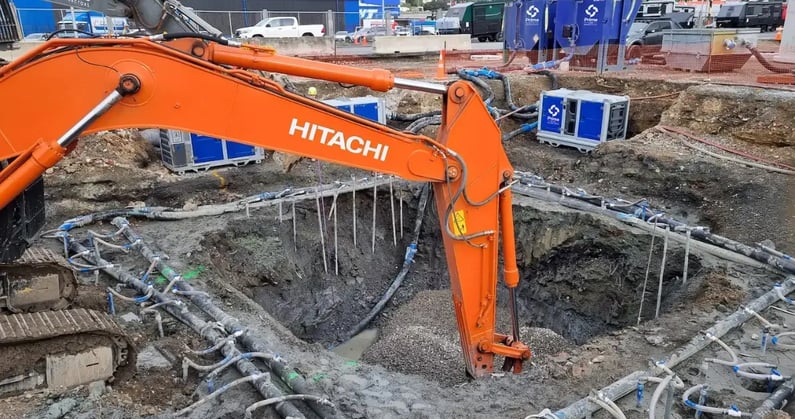
Wellpoint dewatering in action at CentrePort – keeping the excavation dry during works
What is wellpointing?
Wellpointing is a temporary dewatering method used to lower the groundwater table around an excavation.
It works by installing multiple small-diameter wells, known as wellpoints, around the perimeter of the excavation. These wellpoints connect to a header pipe and a specialised wellpoint pump – which applies vacuum across the system and draws groundwater out of the surrounding soil.
By lowering groundwater levels before excavation begins, wellpointing helps maintain dry and stable ground conditions within the work area.
Why does groundwater become a problem during excavation?
Groundwater isn’t just inconvenient – it affects how soil behaves. When groundwater enters an excavation:
- Soil loses strength and stability
- Trench walls can slump or collapse
- Footings and base layers become difficult to compact
- Sediment-laden water creates environmental compliance issues.
If you’re a site manager, these conditions quickly create wider project impacts. Excavations become less stable, safety risk increases, and trades may be delayed while conditions are addressed. Unmanaged discharge can also lead to consent breaches or stop-work notices – adding cost and programme pressure.
In Richard’s experience, delays often occur when groundwater hasn’t been planned for early in the programme – not because it’s unexpected, but because systems need time to achieve stable conditions once installed.
Wellpointing helps manage these risks by lowering groundwater levels before excavation conditions deteriorate.
When groundwater starts affecting ground stability or the programme, wellpointing becomes a control measure rather than a contingency.
See our range of wellpoint dewatering solutions.
Wellpoints installed to control groundwater during trench excavation
How does a wellpoint system work on site?
A wellpoint system works by creating controlled drawdown using multiple small wells connected to a vacuum-assisted pump. A typical wellpoint system includes:
- Small-diameter wellpoints installed below the required excavation depth
- A header pipe linking all wellpoints into a single system
- A wellpoint pump that maintains vacuum and removes groundwater
- A discharge and, where required, water treatment setup.
Common wellpoint types used in practice
Wellpoint types vary depending on ground conditions and installation method. In practice, PVC wellpoints are commonly used for shallow groundwater control in sandy or silty soils.
Where ground conditions are denser or more abrasive, steel wellpoints are usually chosen for their added strength.
Self-jetting wellpoints are often used to speed up installation – allowing each wellpoint to be jetted into the ground using high-pressure water with minimal disturbance.
The choice of wellpoint type is driven by:
- Soil conditions
- Installation depth
- How the system needs to perform on site.
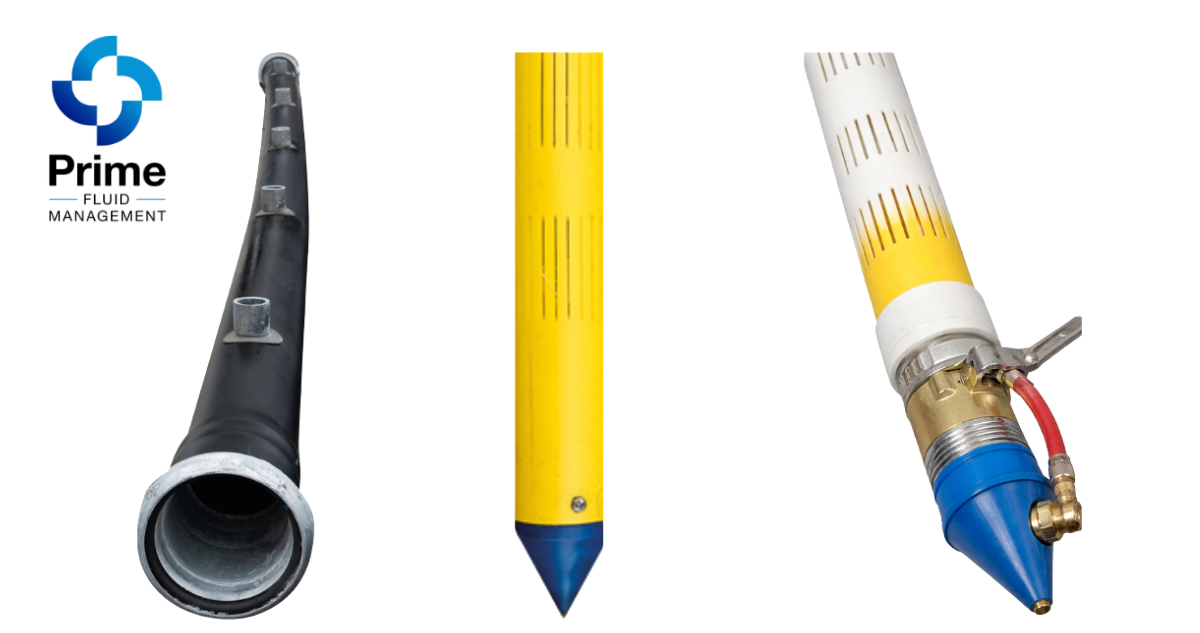
Steel, PVC and self-jetting wellpoints used in wellpoint dewatering systems
How drawdown is achieved across the work area
Each wellpoint creates a drawdown area in the surrounding soil. When multiple wellpoints operate together, these drawdown zones overlap, lowering the groundwater table across the work area.
Pump selection is critical. Wellpoint systems rely on positive displacement pumps that can maintain consistent vacuum, even when pumping a mixture of air and water – which commonly occurs as groundwater levels drop.
In tougher ground conditions, higher vacuum performance may be required to achieve consistent drawdown – particularly where soils are less permeable or groundwater recharge is aggressive. In these situations, PT pumps are often specified.
PT pumps are designed to deliver stronger, more stable vacuum levels across the wellpoint system, helping maintain drawdown where standard vacuum-assisted pumps may struggle.
What are the limits of wellpointing?
Wellpointing is designed to temporarily lower groundwater within a defined work area so excavation and construction can proceed safely.
It isn’t intended to:
- Manage deep or high-volume groundwater
- Permanently stabilise groundwater levels
- Control groundwater behaviour beyond the system boundary.
As groundwater flows toward a dewatered excavation, it can carry fine soils with it. If surrounding ground or nearby structures rely on those soils for support, settlement or movement can occur – even though the groundwater behaviour itself is natural.
Understanding this distinction during planning helps project teams set realistic expectations, clarify responsibility, and reduce the risk of disputes once work is complete.
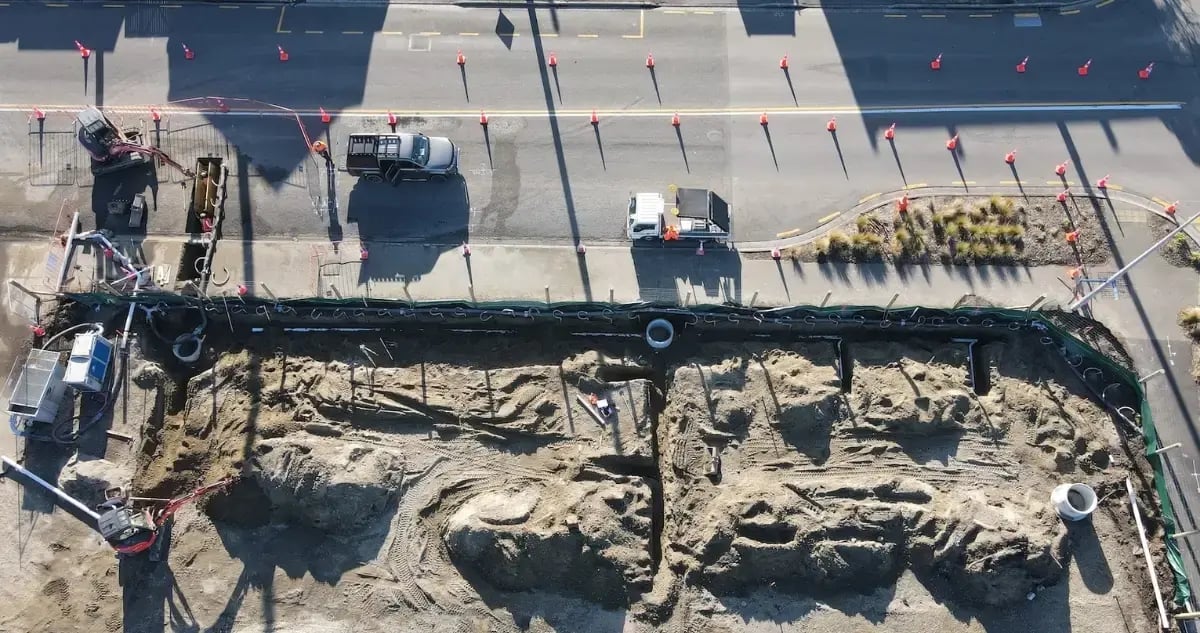
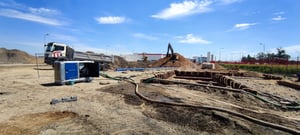
Aerial view of excavation and groundwater control works
Where does wellpointing work best in New Zealand?
Wellpointing is widely used across New Zealand and around the world – but its effectiveness depends heavily on local soil conditions and groundwater behaviour.
It performs best in sandy and silty soils, where groundwater can move freely toward each wellpoint. These conditions are common on many civil preworks sites where shallow groundwater sits within the top few metres.
Richard notes that sandy ground often responds more easily than expected, with wellpoints jetting in quickly. Hard clay layers, on the other hand, usually require more effort and careful installation to achieve consistent drawdown.
Regional variation matters, with free-draining soils like those found in parts of Canterbury often responding favourably to wellpointing. In contrast, layered soils and clays that are common in Auckland require more careful system design. Coastal sites can add further complexity – as tidal influence may cause groundwater levels to fluctuate.
Layered aquifers can also affect performance, with groundwater recharging from below or laterally. This influences wellpoint spacing, depth, and pump capacity – and is where local experience becomes especially important.
Discover how wellpointing was used to dewater at CentrePort in Wellington.
What’s the difference between wellpointing and surface water dewatering?
Surface water dewatering removes water after it has collected in a trench, pit, or low point – such as rainwater or localised seepage. It’s commonly used for short-duration or reactive water removal on site.
Wellpointing works differently by lowering the surrounding groundwater table before excavation begins. On larger civil preworks or excavations where ground stability matters, wellpointing provides the level of groundwater control needed to keep excavations dry and workable.
In these situations, surface water dewatering alone is rarely sufficient.
Out on site, surface water dewatering is typically handled through site dewatering solutions such as auto prime and submersible pumps.
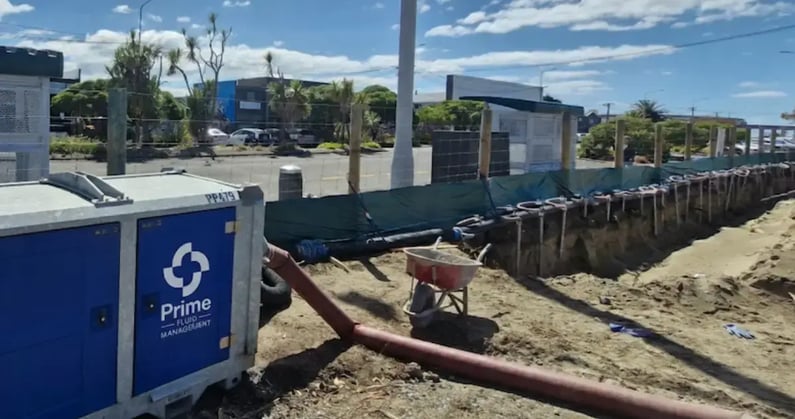
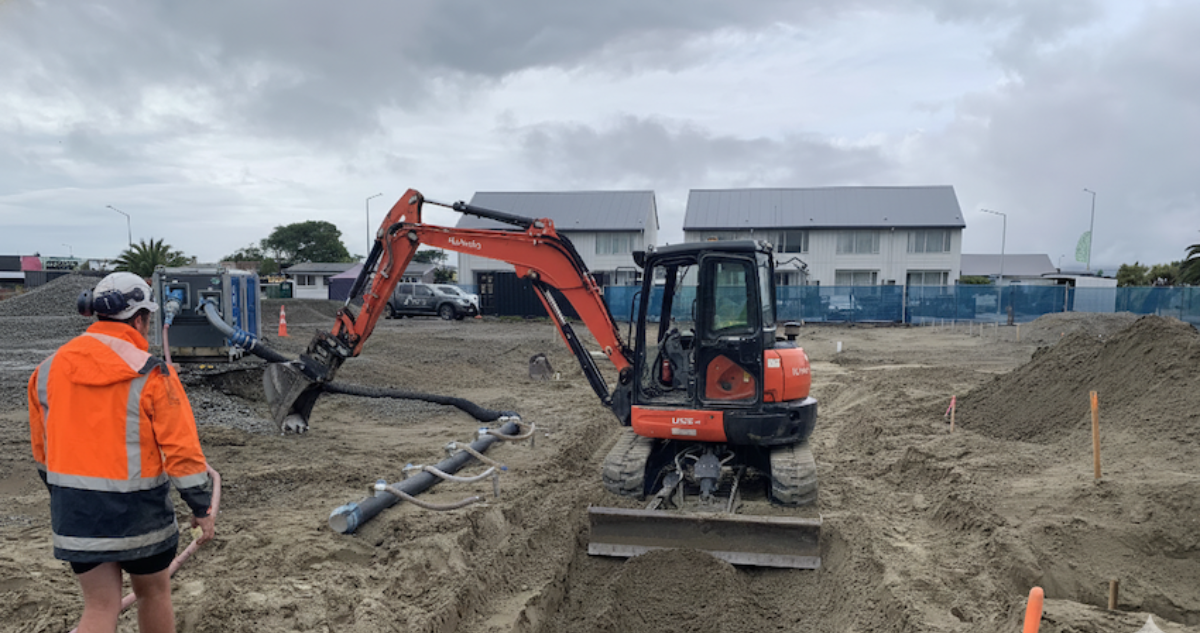
Wellpoint dewatering system managing groundwater at a Christchurch construction site
What’s involved in installing and running a wellpoint system?
Wellpoints are usually installed by jetting them into the ground using high-pressure water, allowing fast installation with minimal disturbance to surrounding soils.
Once commissioned, a wellpoint system runs continuously with minimal day-to-day oversight. Maintaining drawdown depends on correct wellpoint spacing and depth – and on pump capacity exceeding groundwater inflow.
Discharge management also requires planning. Regional councils across New Zealand set strict requirements around sediment, pH, flow rates, and monitoring. Treatment systems are often required to ensure compliance and avoid stop-work orders or remediation costs that can exceed the original project budget.
Richard points out that wellpoint discharge often runs dirty for the first hour or two before clearing – which is why settlement tanks are commonly used to manage sediment before discharge.
Wellpointing is one of the most commonly used methods for controlling shallow groundwater on New Zealand construction sites. When it’s designed correctly and applied in the right conditions, it provides predictable control and safer excavation.
It’s best suited to civil projects dealing with shallow groundwater where excavations need to remain dry and stable during construction.
If you’re a project or site manager responsible for groundwater, you’ll need to understand what wellpointing can, and can’t, do. Clear expectations and the right system design help keep groundwater manageable – rather than a constant source of site disruption.
At Prime Fluid Management, we can help you set up wellpointing systems based on how groundwater actually behaves on site.